Easy Miso Soup Recipe Ready in 15 Minutes
If you’ve ever wondered how restaurants get that clean, savory bowl of soup out to your table in minutes, this miso soup recipe is basically the answer. It uses dashi (a light Japanese stock), miso paste, silken tofu, and a handful of wakame seaweed, and the whole thing comes together in about 15 minutes from a cold stove. You don’t need any special skill here, just a pot, a whisk, and a little patience while the dashi steeps. Once you’ve made this miso soup recipe once, you’ll see why it’s one of the fastest hot meals you can put together from a nearly bare pantry.
Why You’ll Love This Miso Soup Recipe
This version leans on real kombu and bonito flakes for the dashi instead of instant granules, so the broth tastes rounder and less salty straight out of the gate. It also uses two kinds of miso, white and a touch of red, which gives the soup more depth than a single-note white miso bowl. And because everything simmers gently rather than boils, the miso keeps its live cultures and delicate aroma instead of turning bitter.
Ingredients
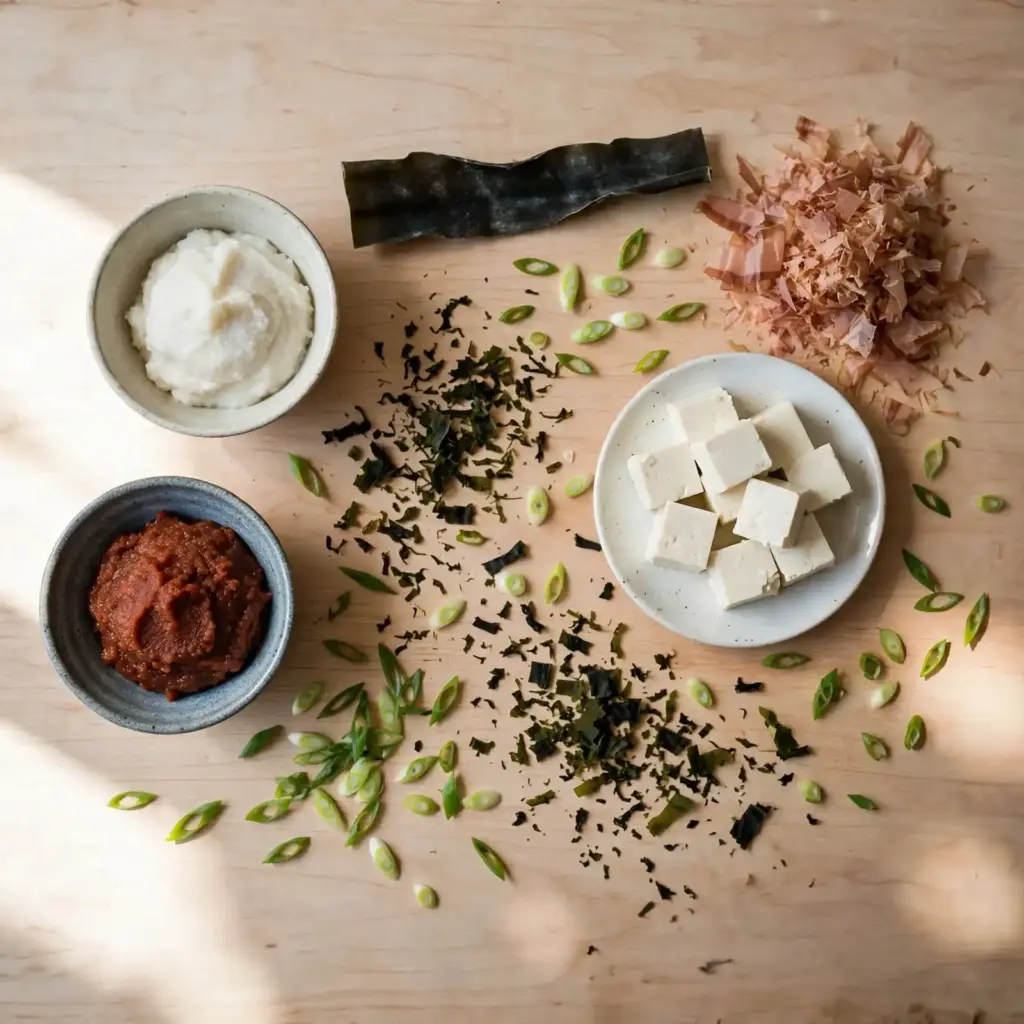
- Water: 4 cups, the base for your dashi.
- Kombu (dried kelp): one 4-inch piece, wipe with a damp cloth, don’t rinse off the white mineral dusting.
- Bonito flakes (katsuobushi): 1 cup, loosely packed. For a vegetarian version, skip the bonito and simmer the kombu a few extra minutes for a stronger flavor.
- White miso paste: 3 tablespoons, for sweetness and a mellow base.
- Red miso paste: 1 tablespoon, for depth. You can use all white miso if that’s what you have.
- Silken tofu: 1 cup, cut into half-inch cubes.
- Dried wakame seaweed: 2 tablespoons, rehydrated in cold water for 5 minutes and drained.
- Scallions: 2, thinly sliced, for garnish.
Miso paste is a fermented soybean product, so this recipe contains soy. Most miso also contains barley or rice koji; check the label if you need this recipe to be gluten-free, since some barley-based miso is not. Tamari-friendly gluten-free miso is easy to find at most grocery stores if that’s a concern for you.
Kombu, bonito flakes, and both types of miso paste are usually stocked in the international or Asian foods aisle of larger grocery stores, and any Japanese grocery will carry all four without trouble. Miso paste keeps for months in the fridge once opened, so buying a full tub is worth it even if you only need a few tablespoons today.
Read Also: Taco Soup Recipe
Recipe Timing
Servings: 4 | Difficulty: Beginner | Cuisine/Course: Japanese, Soup/Starter Prep Time: 5 min | Cook Time: 10 min | Total Time: 15 min
Equipment
A medium saucepan, a fine mesh strainer, and a small whisk or fork for loosening the miso paste before it goes into the pot. Nothing here needs to be fancy, and you likely already own everything this miso soup recipe calls for.
How to Make Miso Soup
Step 1: Make the dashi. Combine the water and kombu in a saucepan and let it sit for 10 minutes if you have time (this pulls out more flavor before any heat touches it). Warm over medium-low heat until small bubbles form around the edges of the pot, about 5 to 6 minutes. Remove the kombu right before the water reaches a full boil; boiling it makes the dashi taste slimy and slightly bitter.
Step 2: Steep the bonito. Add the bonito flakes, bring the liquid to a gentle simmer, then turn off the heat and let the flakes sink to the bottom, about 2 minutes. Strain the dashi through a fine mesh strainer into a clean pot or bowl, pressing lightly on the flakes to release the last of the liquid.
Step 3: Warm the tofu and wakame. Return the strained dashi to low heat. Add the tofu cubes and drained wakame, and warm gently for 2 to 3 minutes, just until the tofu is heated through and the wakame turns a deeper green. The liquid should stay well below a simmer here so the tofu doesn’t break apart.
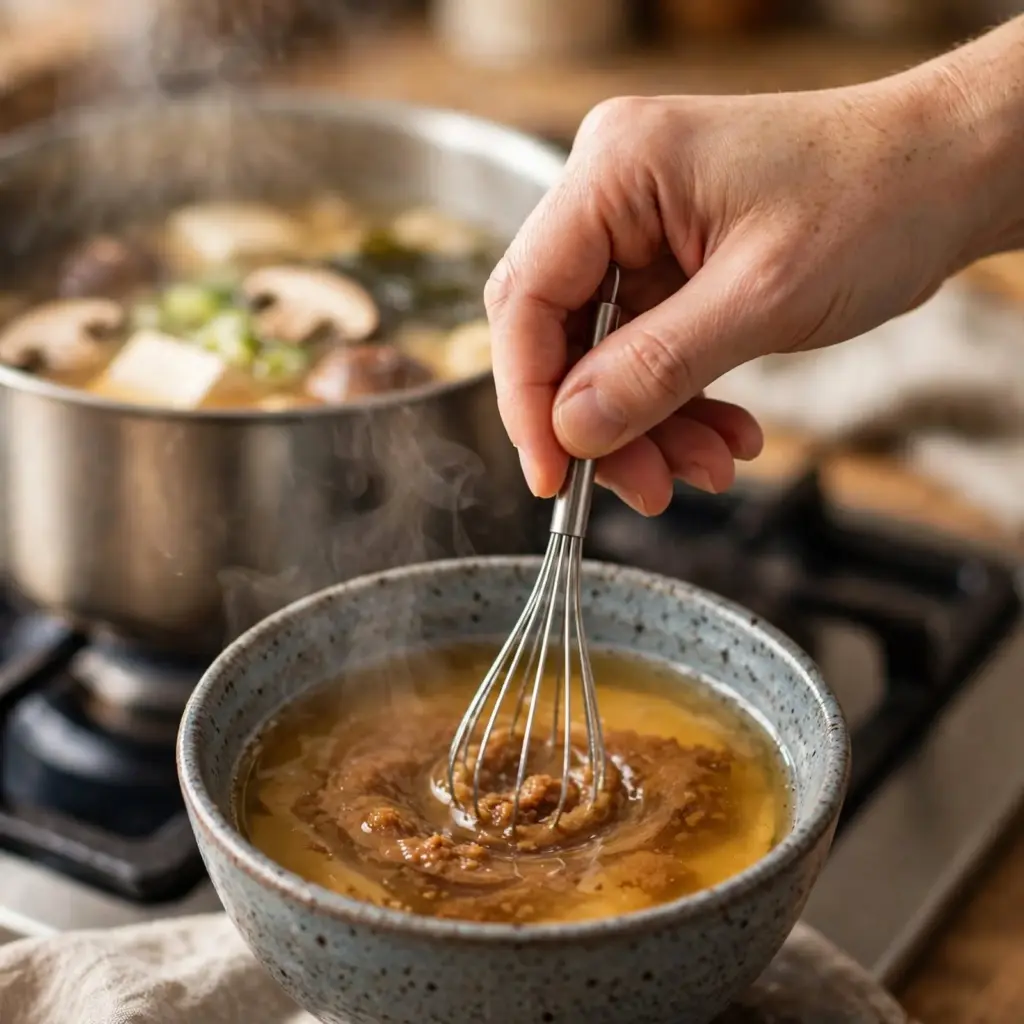
Step 4: Dissolve the miso. This is the step that trips people up in almost every miso soup recipe: never let the broth boil once the miso goes in, or the flavor turns flat and the aroma cooks off. Scoop out about a half cup of the warm dashi into a small bowl, whisk in the white and red miso until completely smooth, then pour that mixture back into the pot. Stir gently to combine.
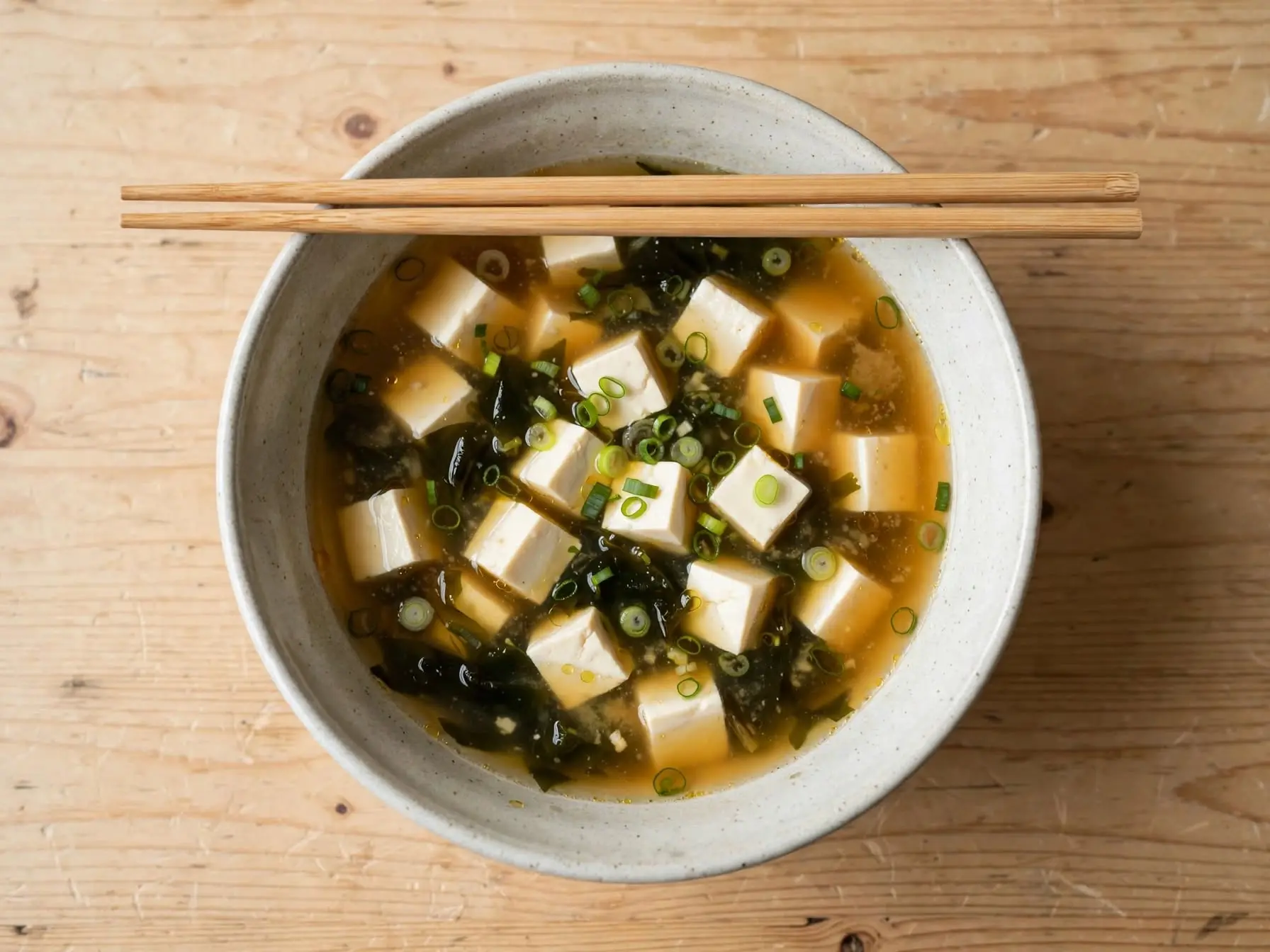
Step 5: Finish and serve. Turn off the heat as soon as the miso is dissolved, ladle the soup into bowls, and scatter the sliced scallions over the top. Serve right away while it’s hot.
Read Also: Lasagna Soup Recipe
Why This Method Works
Steeping the kombu in cold water before heating it pulls out glutamates slowly, which is why professional kitchens rarely just dump kombu into already-hot water. Straining the bonito flakes rather than leaving them in the pot keeps the finished dashi clear instead of cloudy, which matters more than people expect for a miso soup recipe meant to look like something from a restaurant. And dissolving the miso in a small side bowl first, rather than stirring the paste directly into the pot, is the single biggest difference between a smooth bowl and one with little floating clumps of paste.
Troubleshooting
My dashi tastes weak. This usually means the kombu didn’t steep long enough before heating, or the water came to a full boil and the kombu was pulled too early to compensate. Give it the full 10-minute cold steep next time, and pull the kombu right as small bubbles form, not after a rolling boil.
The tofu fell apart. Silken tofu is soft and breaks easily once it’s boiling hard. Keep the heat low once the tofu goes in, and stir gently with the back of a spoon rather than a whisk.
The soup separated or looks grainy after sitting. Miso soup naturally separates a little as it cools, with the solids settling toward the bottom. A quick stir before serving fixes this, and it doesn’t mean anything went wrong with this miso soup recipe.
Serving Suggestions
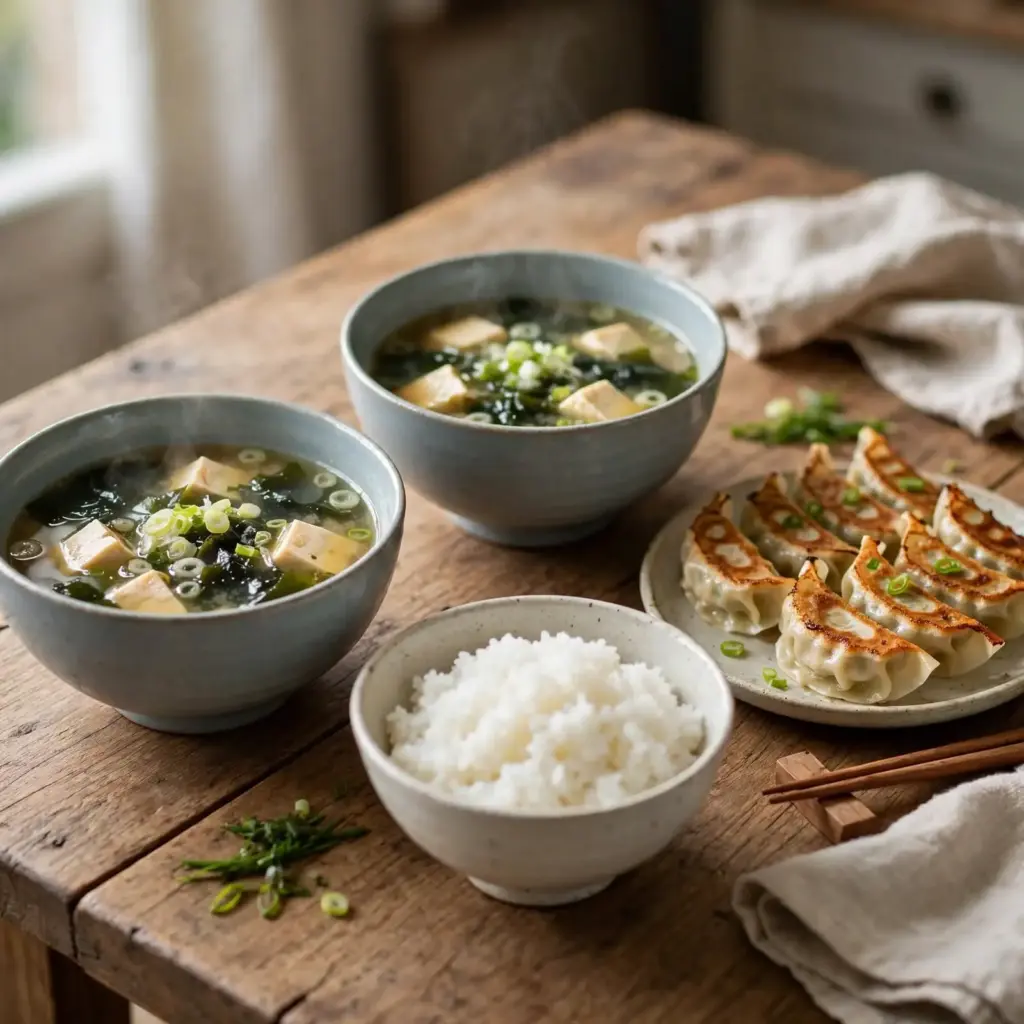
A bowl of this miso soup recipe works well alongside a simple rice bowl, grilled fish, or a plate of gyoza, the same way you’d see it served as part of a larger Japanese meal rather than as a stand-alone lunch. It also makes a good light starter before a heavier main, since the broth is warming without being filling.
Scaling This Recipe
Doubling or tripling this miso soup recipe works cleanly since the ratios of miso to dashi stay the same, just scale the water, kombu, bonito, and miso together. The one exception is salt: taste before adding all of the miso once you’ve doubled the batch, since concentrated batches of dashi can taste stronger than a single batch made the same way. This makes it easy to turn one miso soup recipe into enough for a full family dinner without any guesswork.
Key Tips
Taste your dashi before adding the miso. If it tastes weak or watery, that’s the moment to fix it, not after the miso is already in, since miso paste tends to mask a thin base rather than fix it. Whisking the miso in a separate small bowl first is not optional if you want a smooth, restaurant-style bowl; adding paste straight to the pot almost always leaves little clumps floating around. If you’re making a bigger batch of this miso soup recipe for a crowd, keep the tofu and wakame in a separate container and add them to each bowl fresh, since they turn soft and lose texture if they sit in hot broth for too long.
Variations
Vegetarian or vegan: Skip the bonito flakes entirely and use a kombu-only dashi, or swap in a store-bought vegetable dashi packet. The soup will taste a little lighter but still holds up well.
Add-ins: Sliced mushrooms, a few strands of enoki, or a small handful of spinach all work well added at the same time as the tofu. Some cooks like a soft-boiled egg dropped in right before serving.
Spicier bowl: A small spoonful of chili oil or a pinch of shichimi togarashi stirred in at the table turns this into a more warming, cold-weather version of the same miso soup recipe.
Heartier bowl: Thin strips of chicken breast, poached gently in the dashi before the tofu goes in, turn this from a starter into a light one-bowl meal. Add a small handful of soba noodles for the same effect without any extra protein.
Storage and Reheating
Miso soup is best fresh, but the dashi itself keeps well in the fridge for up to 3 days in a sealed container. If you want to make this miso soup recipe ahead of time, store the dashi separately from the miso paste, tofu, and wakame, and combine everything only when you’re ready to eat. Reheat the dashi gently on the stove, just until warm, then whisk in the miso off the heat so it doesn’t overcook. Freezing isn’t recommended once the miso and tofu are already mixed in, since the tofu’s texture turns grainy and watery after thawing.
Read Also: French Onion Soup Recipe
Nutrition
Nutrition will vary depending on the miso brand and dashi method you use. As a rough estimate per serving (based on 4 servings): Calories: 60 | Protein: 5g | Carbs: 6g | Fat: 2g | Fiber: 1g | Sugar: 2g | Sodium: 680mg. This is an estimate only, not a lab-tested figure, so check your specific ingredient labels if you’re tracking closely, especially if you’re following this miso soup recipe as part of a low-sodium diet.
FAQs
Can I make this miso soup recipe ahead of time?
You can make the dashi up to 3 days ahead and store it in the fridge, but hold off on adding the miso, tofu, and wakame until just before serving. Miso loses some of its aroma the longer it sits in hot liquid, and the tofu softens too much if it sits mixed in overnight.
Why did my miso soup turn out cloudy or bitter?
This usually comes down to boiling the dashi or the finished soup. A hard boil pulls bitter compounds out of the kombu and cooks off the delicate aroma in the miso. Keep the heat at a bare simmer through every step for the cleanest-tasting bowl.
What can I use instead of bonito flakes?
A kombu-only dashi works fine for a vegetarian miso soup recipe, though the flavor will be lighter and less smoky. Some cooks add a few dried shiitake mushrooms to the kombu soak for extra depth without any fish product.
Is miso soup gluten-free?
It depends on the miso. Some miso pastes are made with barley koji and contain gluten, while others use only rice or soybeans. Check the label, or look for a miso brand specifically marked gluten-free if this matters for you.
Can I freeze miso soup?
Freezing isn’t ideal once tofu and miso are mixed into the broth, since tofu turns grainy and watery after it thaws. If you want to freeze ahead, freeze just the plain dashi and add the miso, tofu, and wakame fresh after reheating.
Conclusion
This miso soup recipe earns its spot in a regular rotation because it takes about 15 minutes, uses ingredients that keep well in the pantry and fridge, and delivers a bowl that tastes closer to what you’d get at a good izakaya than most quick soups manage. Once you’ve made your own dashi from scratch a couple of times, it stops feeling like a special-occasion project and starts feeling like a normal Tuesday night dinner. Keep a bag of kom
Miso Soup
Ingredients
Method
- Combine water and kombu in a saucepan; let sit 10 minutes, then warm over medium-low heat until small bubbles form around the edges (5 to 6 minutes). Remove kombu before a full boil.
- Add bonito flakes, bring to a gentle simmer, turn off heat, and let flakes settle (about 2 minutes). Strain through a fine mesh strainer.
- Return strained dashi to low heat. Add tofu and drained wakame; warm gently 2 to 3 minutes without simmering hard.
- Whisk white and red miso into a half cup of the warm dashi in a separate bowl until smooth, then stir back into the pot. Do not let it boil.
- Turn off heat, ladle into bowls, and top with scallions. Serve immediately.