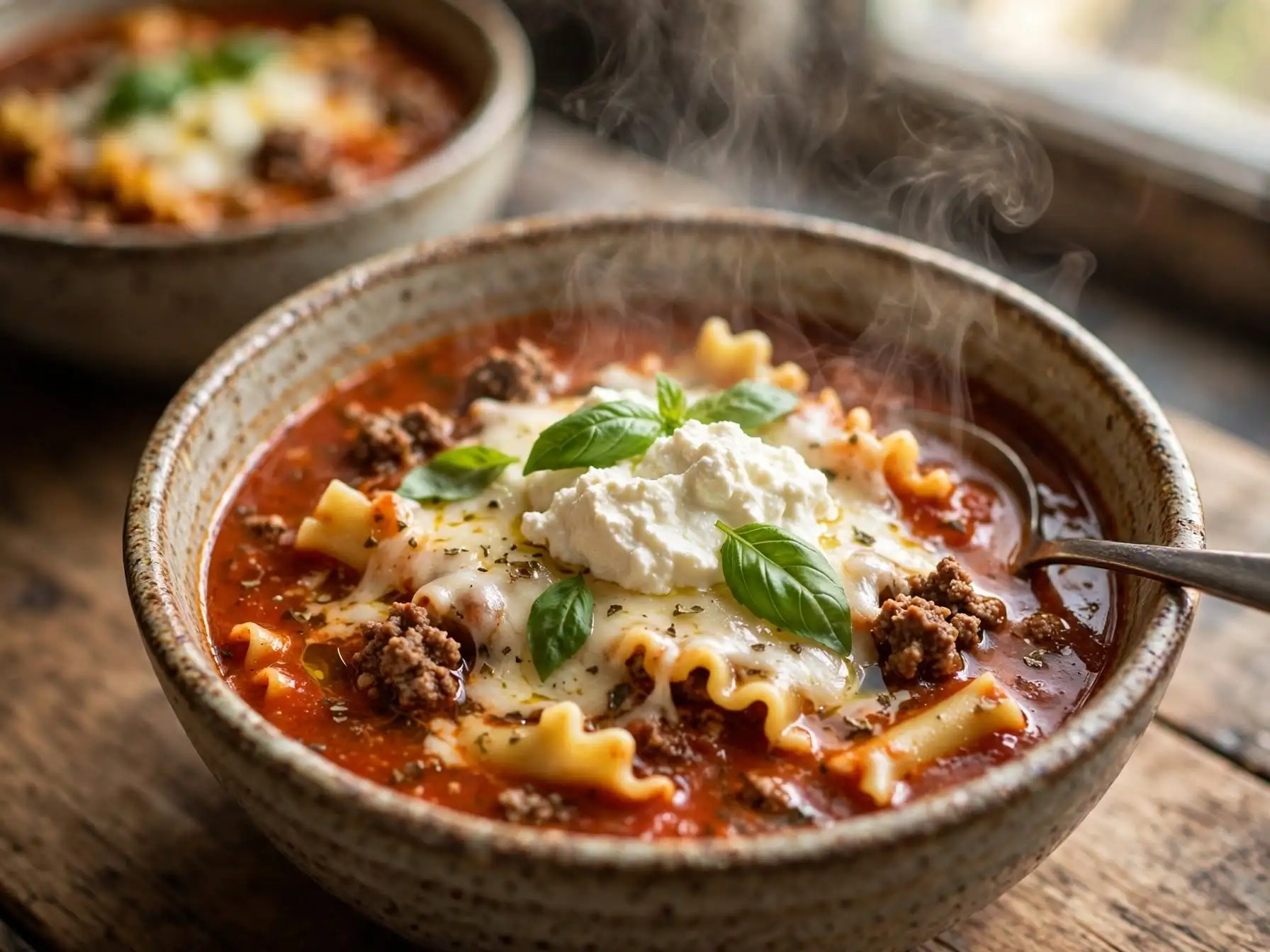
30-Minute Lasagna Soup: The Easy One-Pot Dinner
This lasagna soup takes everything you already love about a baked pan of lasagna, the beefy tomato sauce, the broken noodles, the pull of melted cheese, and turns it into a single pot you can have on the table in about half an hour. There’s no layering, no waiting for a casserole to set, and no stack of dirty dishes afterward. You brown the meat, build the broth, drop in the noodles, and let everything simmer together until the pasta is tender and the kitchen smells like a Sunday dinner on a Tuesday night.
Why You’ll Love This Lasagna Soup
Two things make this version worth keeping in your regular rotation. First, the noodles cook directly in the broth, so they soak up all that tomato and garlic flavor instead of sitting on the side as a separate starch. Second, the cheese goes on top as a molten dollop right before serving, which means every bowl gets that stretchy, gooey lasagna moment without anyone needing to slice a casserole.
Ingredients
- 1 pound ground beef (85/15 works well here; the little bit of extra fat keeps the broth from tasting thin)
- 1 medium yellow onion, diced
- 4 cloves garlic, minced
- 2 tablespoons tomato paste
- 1 can (28 ounces) crushed tomatoes
- 1 can (14.5 ounces) diced tomatoes, undrained
- 6 cups beef broth (low-sodium, so you can control the salt yourself)
- 1 teaspoon dried oregano
- 1 teaspoon dried basil
- 1/2 teaspoon crushed red pepper flakes (optional, leave out if you’re feeding kids or heat-sensitive eaters)
- 8 ounces lasagna noodles, broken into 2-inch pieces (regular lasagna sheets snap easily by hand)
- 1 cup ricotta cheese
- 1 1/2 cups shredded mozzarella
- 1/4 cup grated Parmesan, plus more for serving
- Fresh basil, torn, for garnish
- Salt and black pepper, to taste
- Olive oil, for the pot
Allergens present as written: dairy (ricotta, mozzarella, Parmesan) and gluten/wheat (lasagna noodles). There’s no egg, tree nut, peanut, soy, fish, or shellfish in this recipe as written. For a dairy-free version, swap the cheeses for a dairy-free mozzarella shred and skip the ricotta dollop, using a cashew-based ricotta alternative instead. For gluten-free, use a gluten-free lasagna noodle or gluten-free pasta shape and check that your broth and canned tomatoes are labeled gluten-free, since some broths use wheat-derived thickeners. Substitutions change the texture and flavor of this dish and don’t guarantee an allergen-free result. If you or anyone you’re serving has a food allergy, check every product label and talk to a doctor or dietitian if you’re unsure.
Read Also: French Onion Soup Recipe
Recipe Timing
Servings: 6 | Difficulty: Easy | Cuisine/Course: Italian-American, Main Dish Prep Time: 10 min | Cook Time: 25 min | Total Time: 35 min
The prep time covers dicing the onion, mincing the garlic, and breaking the noodles by hand, all of which you can do while the beef browns if you’re comfortable multitasking. The cook time is mostly hands-off simmering once the broth is built, which is part of why this soup works so well on a weeknight.
Equipment
You’ll need a large Dutch oven or a heavy-bottomed soup pot, at least 5 quarts, since the noodles expand as they cook and the pot needs room for that. A wooden spoon for scraping up the browned bits from the bottom of the pot helps a lot, since that fond is where a lot of the deep flavor in this soup comes from.
How to Make Lasagna Soup
Brown the beef. Heat a tablespoon of olive oil in your pot over medium-high heat. Add the ground beef and break it up with a wooden spoon, cooking until no pink remains and the meat reaches an internal temperature of at least 160°F, about 6 to 8 minutes. Drain excess fat if there’s more than a couple tablespoons left in the pot, since too much grease will make the broth greasy instead of rich.
Read Also: Taco Soup Recipe
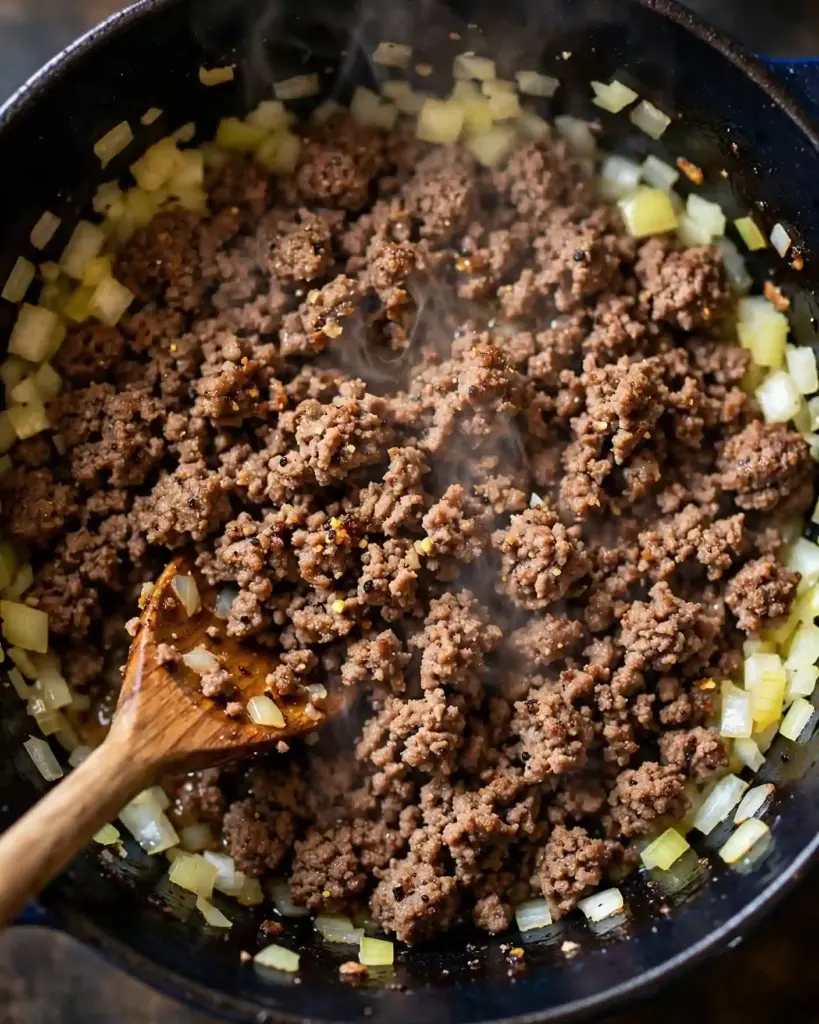
Build the base. Add the diced onion to the pot and cook until it softens and turns translucent, about 4 minutes. Stir in the garlic and tomato paste and cook for 1 minute more, just until the tomato paste darkens slightly and smells toasted rather than raw. This step matters because raw tomato paste tastes flat and a little metallic, while cooking it briefly in the fat brings out a deeper, almost caramelized sweetness that carries through the whole pot of lasagna soup.
Add the tomatoes and broth. Pour in the crushed tomatoes, diced tomatoes with their juice, and beef broth. Stir in the oregano, dried basil, and red pepper flakes if using. Bring the pot to a boil, then reduce the heat so it holds at a steady simmer, small bubbles breaking the surface but not a rolling boil.
Cook the noodles in the pot. Add the broken lasagna noodles directly to the simmering broth. Stir every couple of minutes so they don’t clump or stick to the bottom of the pot. Simmer uncovered for 12 to 15 minutes, or until the noodles are tender but still hold their shape, tasting a piece to check rather than relying on the clock alone since noodle brands vary.
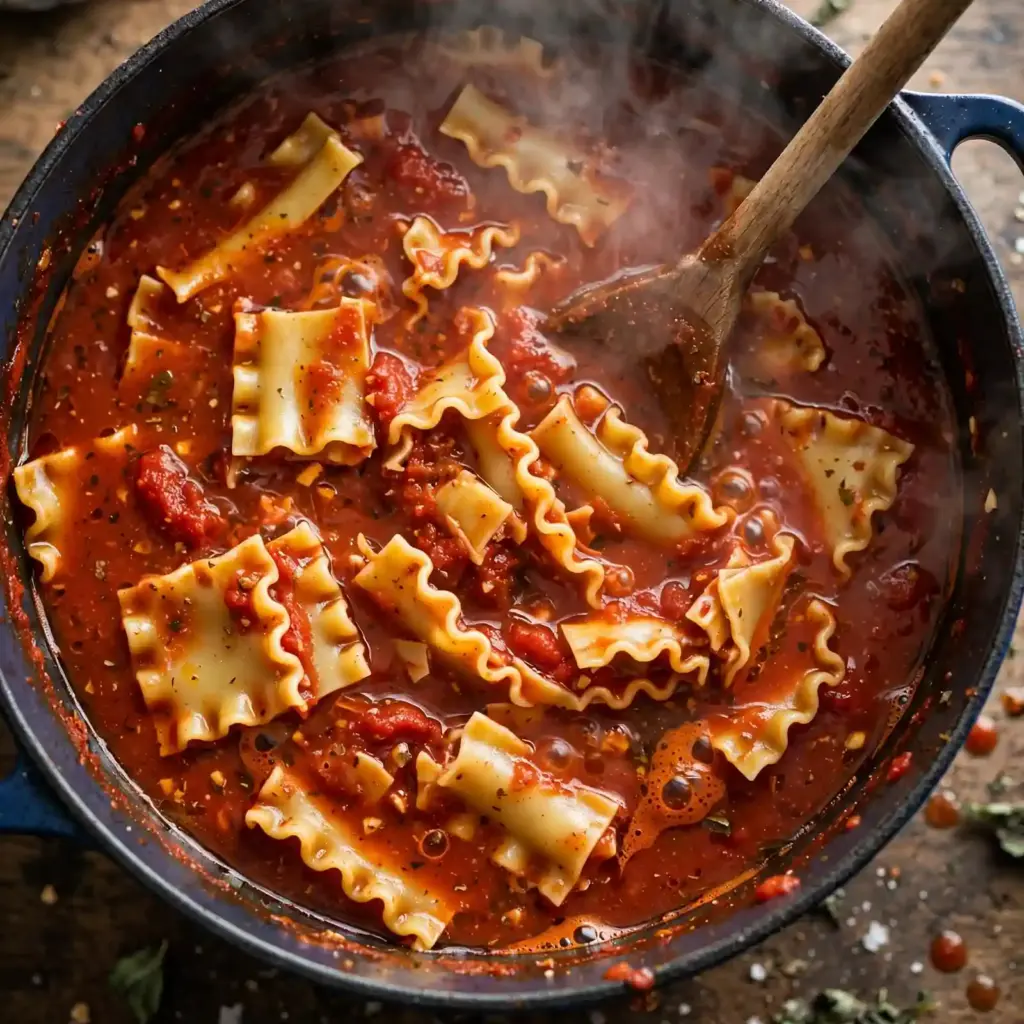
Season and finish the broth. Taste the soup and add salt and black pepper as needed. Beef broth brands vary a lot in sodium, which is exactly why this recipe calls for low-sodium broth and lets you season at the end instead of guessing up front. If the soup thickened more than you’d like as the noodles absorbed liquid, stir in an extra half cup of broth or water to loosen it back up.
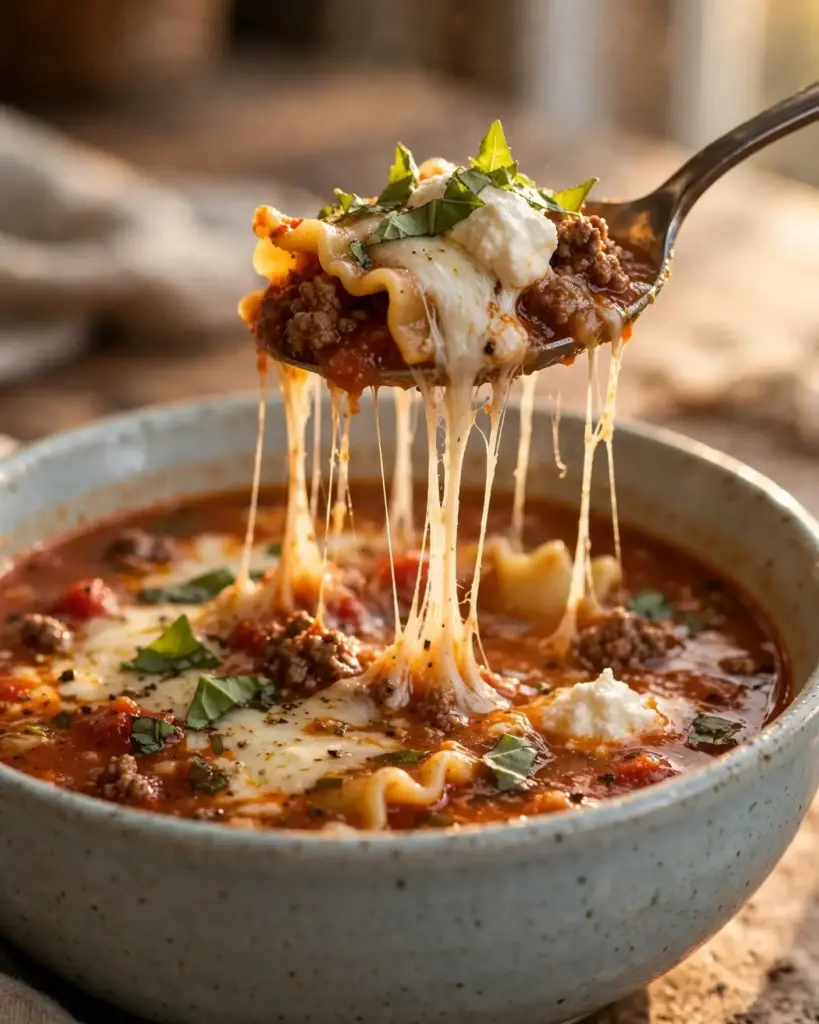
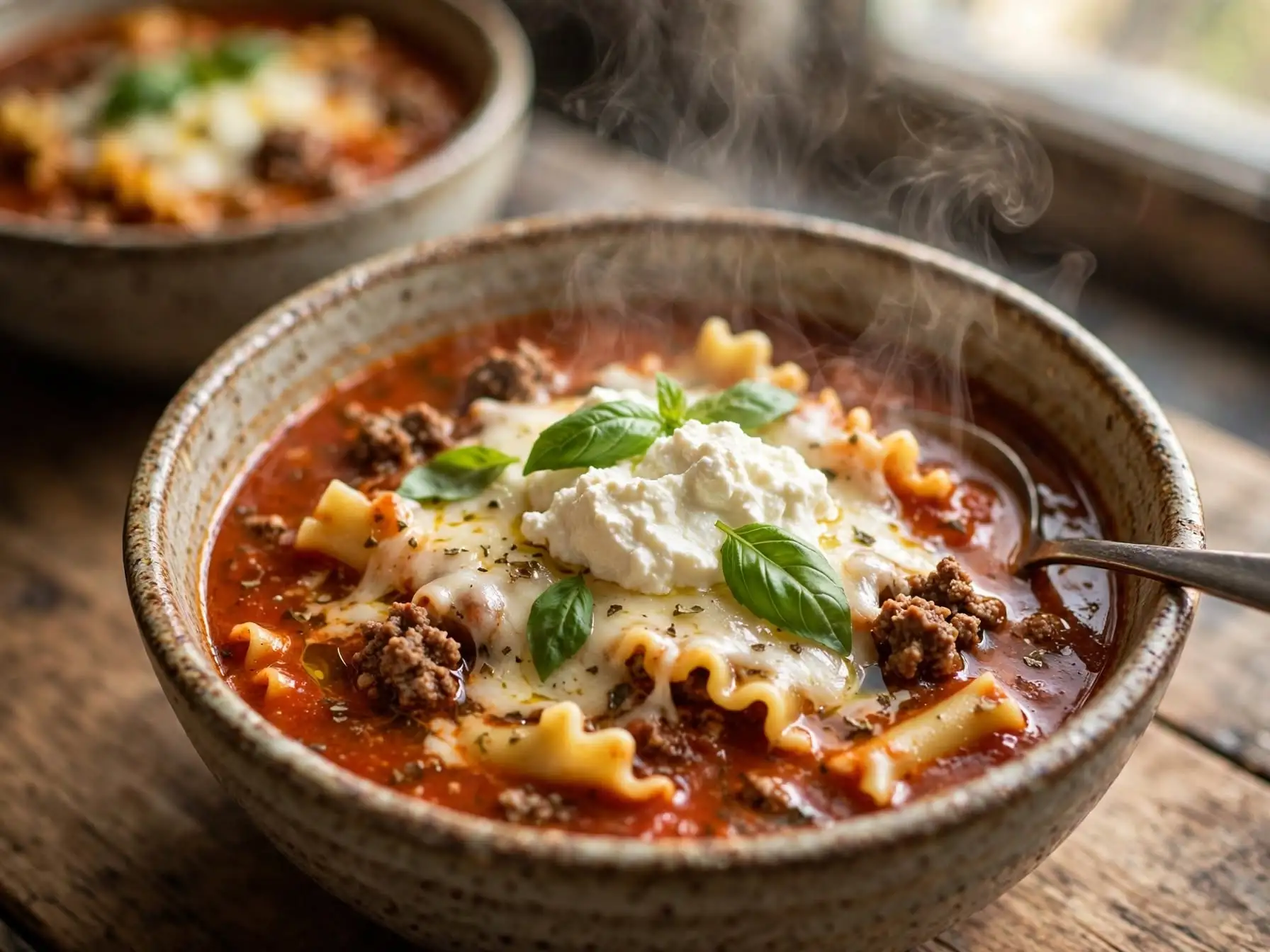
Add the cheese and serve. In a small bowl, stir the ricotta with a pinch of salt to loosen it slightly. Ladle the lasagna soup into bowls, then top each one with a spoonful of the seasoned ricotta and a handful of shredded mozzarella. The residual heat of the soup will melt the mozzarella into soft, stretchy pockets within a minute or two. Finish with grated Parmesan and torn fresh basil.
Key Tips for the Best Lasagna Soup
Add the noodles close to serving time. Pasta keeps absorbing liquid after it’s cooked, so a pot that sits for an hour will be noticeably thicker than one served right away.
Don’t skip browning the tomato paste. It’s the difference between a broth that tastes like canned tomatoes and one that tastes like it simmered all afternoon.
Use a broth you’d actually drink on its own, since it’s the base liquid for the whole pot. A good boxed low-sodium broth is fine; homemade is even better if you have it.
Troubleshooting Your Lasagna Soup
The noodles turned mushy. This usually means the soup simmered too long after the noodles were tender. Pull the pot off the heat as soon as they’re done, and if you’re not serving right away, cook the noodles separately and add them to individual bowls instead.
The broth is too thin. Simmer uncovered a few extra minutes to reduce, or stir in an extra spoonful of tomato paste.
The broth is too thick. This is normal, especially with leftovers, since the noodles keep absorbing liquid. Stir in extra broth, a half cup at a time, until it’s back to the consistency you want.
The cheese didn’t melt. Make sure the soup is hot enough when you ladle it, close to a simmer, since the residual heat is what melts the mozzarella.
Read Also: Potato Soup Recipe
Variations on Lasagna Soup
Turkey version: Swap the ground beef for ground turkey for a lighter version. Turkey has less fat, so add an extra tablespoon of olive oil when browning to keep the base from tasting too lean.
Vegetarian version: Skip the meat and use a plant-based ground crumble or a cup and a half of cooked lentils in its place, and swap the beef broth for a good vegetable broth.
Spinach lasagna soup: Stir in 2 to 3 cups of fresh baby spinach during the last 2 minutes of cooking, letting it wilt right into the broth. It’s an easy way to add a vegetable without changing the character of the dish.
Spicier lasagna soup: Increase the red pepper flakes to a full teaspoon and add a diced jalapeño along with the onion for more heat throughout.
Serving Suggestions
A simple green salad with a sharp vinaigrette balances the richness of the cheese and beef. Garlic bread is the natural pairing too, since you’ll want something to mop up the last bit of broth. For a lighter side, roasted broccoli works well without competing with the tomato flavor.
Storage, Reheating, and Freezing
Storage: Let the soup cool to room temperature, then store it in an airtight container in the refrigerator for up to 4 days. Expect the noodles to keep absorbing broth as it sits, so leftovers will be noticeably thicker than the first serving.
Reheating: Warm leftovers on the stovetop over medium-low heat, stirring occasionally, and add extra broth or water a splash at a time until the consistency loosens back up. The microwave works too, in 60-second bursts, stirring between each.
Freezing: This lasagna soup freezes reasonably well, but the noodles soften further after thawing, so for the best texture, consider freezing the broth and meat mixture without the noodles, then cooking fresh noodles and stirring them in when you reheat. If you do freeze it fully assembled, portion it into airtight containers and freeze for up to 3 months, then thaw overnight in the refrigerator before reheating gently on the stove.
Make-ahead: You can make the meat and tomato broth base up to 2 days ahead and refrigerate it separately from the noodles. When you’re ready to eat, bring the base back to a simmer and cook the noodles directly in it, which keeps the texture closer to fresh.
Nutrition (Per Serving, Estimated)
Calories: 420 | Protein: 26g | Carbohydrates: 32g | Fat: 21g | Fiber: 3g | Sugar: 7g | Sodium: 780mg
This is an estimate based on the ingredients listed and will vary depending on the specific brands you use, especially the broth and cheese. For an exact count, use a nutrition calculator with your specific products.
Frequently Asked Questions
Can I make lasagna soup ahead of time?
You can make the tomato and beef base up to 2 days ahead, but hold off on cooking the noodles until closer to serving. Noodles cooked in advance keep absorbing liquid and will turn soft if they sit in the broth too long.
Why did my noodles get mushy in the soup?
Mushy noodles almost always come down to overcooking or letting the finished soup sit on heat too long. Pull the noodles as soon as they’re tender rather than going by a fixed time, since brands cook at slightly different rates.
Can I use a different pasta instead of lasagna noodles?
Yes. Broken fettuccine, pappardelle, or even mafaldine work well if that’s what you have. The broken lasagna noodle shape is traditional for this dish, but the flavor comes mostly from the broth, so any wide, sturdy pasta shape will work in a pinch.
Does lasagna soup freeze well?
It freezes reasonably well, though the noodles get softer after thawing. For the best texture, freeze just the broth and meat base, then cook fresh noodles when you’re ready to eat.
Is this recipe safe for someone with a dairy allergy?
Not as written, since it includes ricotta, mozzarella, and Parmesan. You can substitute dairy-free cheese alternatives, but that changes the texture and doesn’t guarantee the dish is fully allergen-free. Always check labels and check with a doctor if you’re unsure.
Conclusion
This lasagna soup gives you the flavor of a full pan of lasagna without the layering, the baking dish, or the hour of oven time, which makes it one of the easier ways to get that same comfort onto the table on a weeknight. The broth does most of the work here, so taking the extra minute to brown the tomato paste and season at the end really does pay off in the final bowl. Once you’ve made it once, it’s the kind of recipe you’ll find yourself reaching for any
Lasagna Soup
Ingredients
Method
- Brown the ground beef in olive oil over medium-high heat until no pink remains and it reaches 160°F, 6 to 8 minutes. Drain excess fat.
- Add onion, cook until translucent, about 4 minutes. Stir in garlic and tomato paste, cook 1 minute.
- Add crushed tomatoes, diced tomatoes, beef broth, oregano, basil, and red pepper flakes. Bring to a boil, then reduce to a simmer.
- Add broken lasagna noodles. Simmer uncovered, stirring occasionally, 12 to 15 minutes, until tender.
- Season with salt and pepper to taste.
- Ladle into bowls, top with seasoned ricotta, shredded mozzarella, Parmesan, and fresh basil. Serve hot.




4 Comments
Comments are closed.