Easy 45-Minute Chicken Noodle Soup (One Pot)
When the weather turns or someone in the house comes down with a cold, chicken noodle soup is usually the first thing I want to make. This version comes together in one pot in about 45 minutes, and it doesn’t rely on a rotisserie chicken or a long simmer to taste like it’s been cooking all afternoon. The chicken poaches right in the broth, picking up flavor from the vegetables as it goes, and the noodles go in near the end so they stay tender instead of turning to mush.
Why You’ll Love This Chicken Noodle Soup
The broth gets its depth from browning the chicken lightly before it simmers, plus a splash of lemon juice at the end that wakes everything up. And because everything cooks in one pot, cleanup is short: a cutting board, a knife, and one large pot.
Ingredients
- 2 tablespoons olive oil or butter
- 1 pound boneless, skinless chicken thighs (chicken breast works too, see substitution note below)
- 1 medium yellow onion, diced
- 3 medium carrots, peeled and sliced into coins
- 3 stalks celery, sliced
- 3 cloves garlic, minced
- 8 cups low-sodium chicken broth
- 2 bay leaves
- 1 teaspoon dried thyme (or 3 sprigs fresh thyme)
- 6 ounces egg noodles (wide or medium; use a gluten-free egg noodle if needed, see note)
- Salt and black pepper, to taste
- 1 tablespoon fresh lemon juice
- 2 tablespoons chopped fresh parsley or dill, for serving
Substitution notes: Chicken breast can replace the thighs; it cooks a bit faster and is slightly leaner, though thighs stay juicier through the simmer. If egg noodles aren’t an option, a gluten-free egg noodle or plain gluten-free pasta shape works, just watch the cook time since gluten-free noodles often soften faster. Fresh thyme can stand in for dried at a 3:1 ratio (three sprigs for every teaspoon of dried).
Read Also: Buffalo Chicken Dip
Allergens present as written: egg (from the egg noodles) and gluten/wheat (from the noodles). To make this gluten-free, swap in a gluten-free egg noodle or rice noodle. There is no dairy, soy, tree nut, peanut, fish, or shellfish in this recipe as written. The recipe as written contains egg and gluten. Substitutions change the recipe but don’t guarantee an allergen-free result, so check your specific product labels and ask a doctor or dietitian if you’re cooking for someone with a diagnosed allergy.
Recipe Timing
Servings: 6 | Difficulty: Easy | Cuisine/Course: American, main dish Prep Time: 15 min | Cook Time: 30 min | Total Time: 45 min
Equipment
A large pot or Dutch oven (at least 5 quarts) and a sharp knife for slicing the vegetables. A ladle makes serving easier, and tongs help when you pull the chicken out to shred it.
How to Make Chicken Noodle Soup
1. Sear the chicken. Heat the olive oil in the pot over medium-high heat. Season the chicken thighs with salt and pepper, then sear them for about 3 minutes per side, just until golden on the outside. They won’t be cooked through yet, and that’s fine. Because you’re handling raw chicken, wash your hands, cutting board, and any utensils that touched it before moving on to the next step.
2. Build the base. Remove the chicken to a plate. In the same pot, add the onion, carrots, and celery. Cook for 5 to 6 minutes, stirring occasionally, until the onion turns translucent and the vegetables start to soften. Add the garlic and cook for 30 seconds more, just until fragrant.
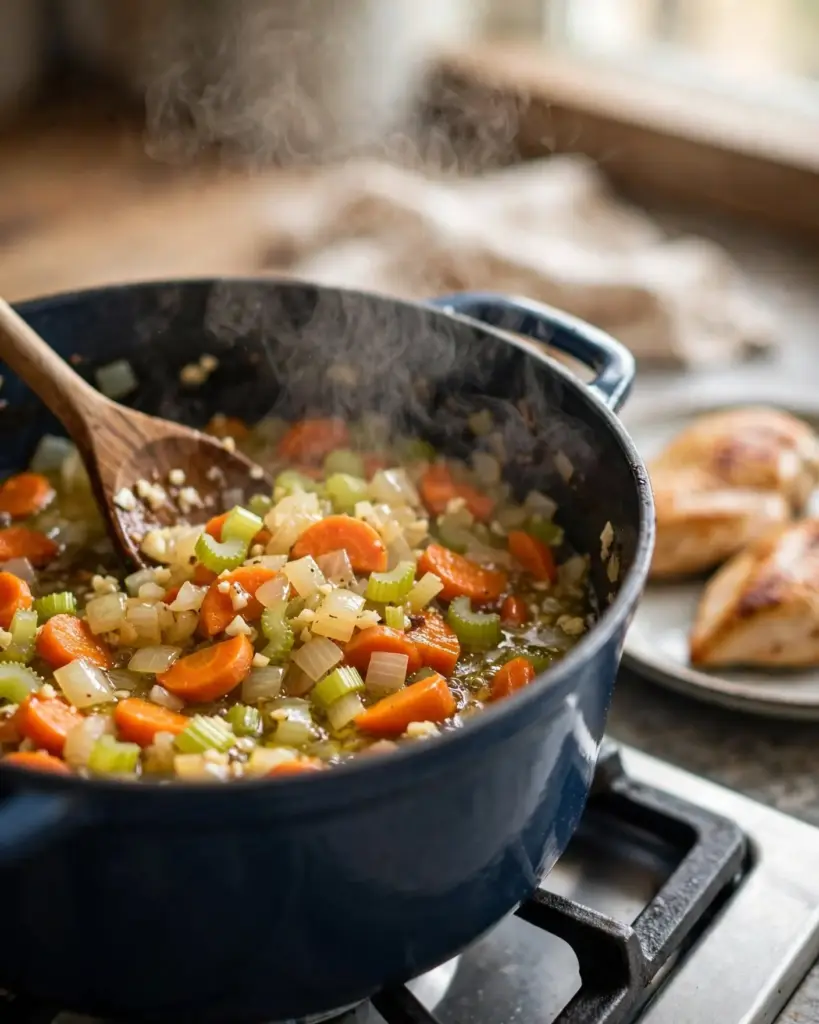
3. Simmer the chicken. Return the chicken to the pot, then pour in the chicken broth. Add the bay leaves and thyme. Bring the pot to a boil, then reduce the heat and let it simmer gently for 15 to 18 minutes, or until a thermometer inserted into the thickest part of the chicken reads 165°F.
4. Shred the chicken. Pull the chicken out with tongs and set it on a cutting board to cool for a couple of minutes. Shred it into bite-sized pieces using two forks, then return it to the pot.
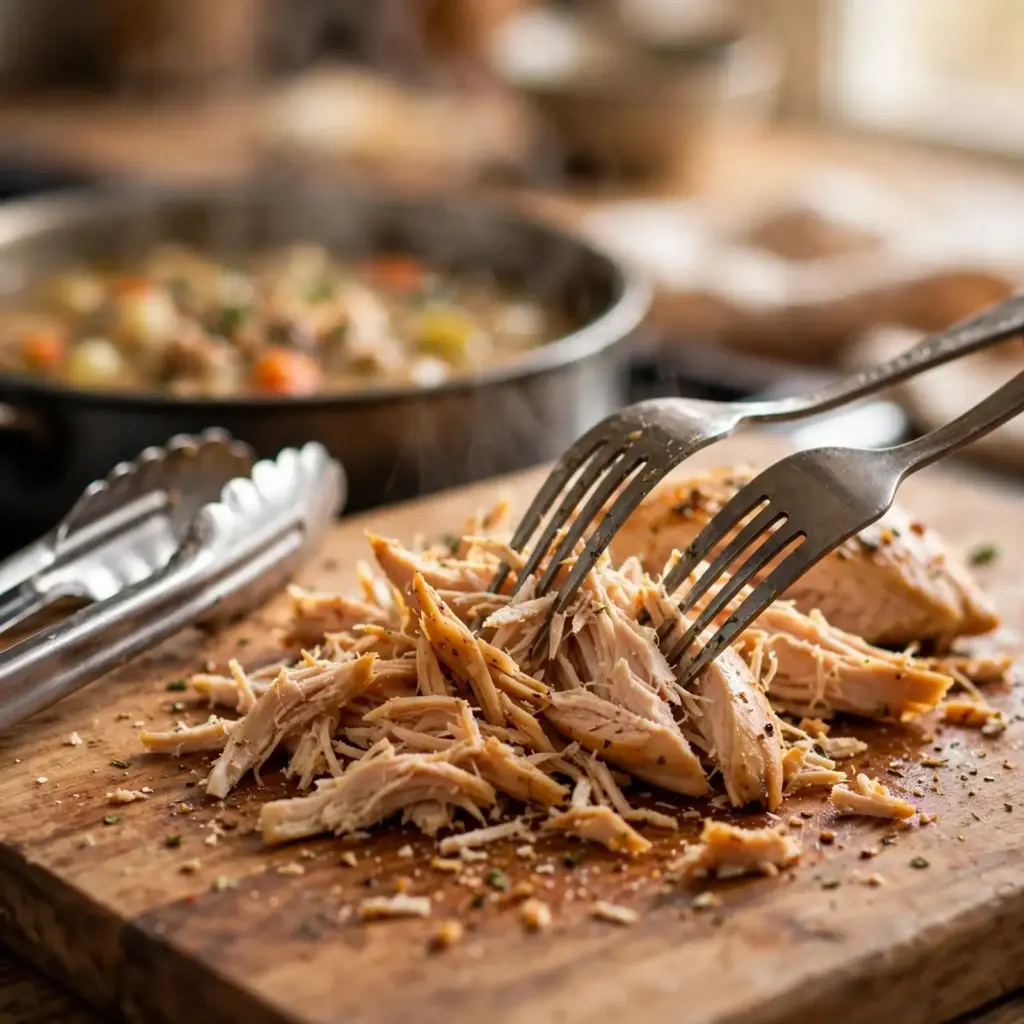
5. Cook the noodles. Bring the soup back to a gentle boil and add the egg noodles. Cook for 6 to 8 minutes, or until the noodles are tender but still have a slight bite (check the package for the exact time, since brands vary).
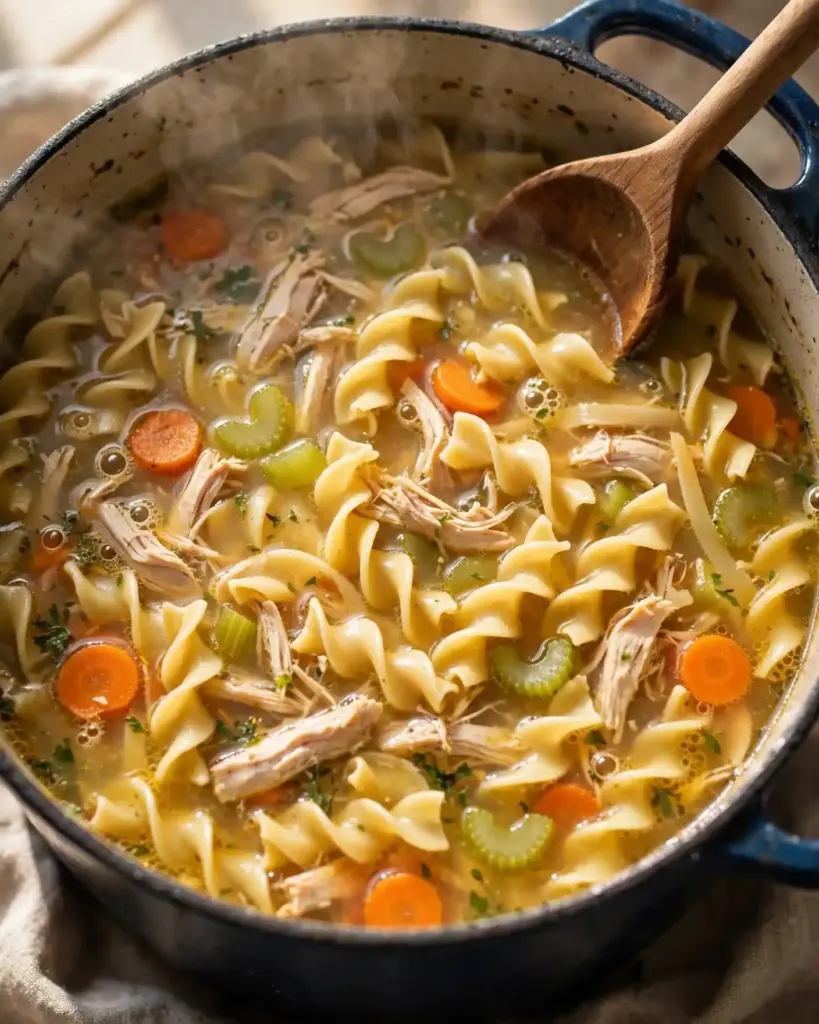
6. Finish and season. Remove the bay leaves. Stir in the lemon juice, then taste and adjust the salt and pepper. The lemon juice isn’t there to make the soup taste like lemon; it’s there to sharpen the broth so the other flavors come through more clearly.
7. Serve. Ladle the chicken noodle soup into bowls and top with the chopped parsley or dill.
Why This Works
Searing the chicken before it simmers builds a small amount of fond on the bottom of the pot, which dissolves into the broth once the liquid goes in and adds a savory backbone that a straight poach doesn’t give you. Cooking the noodles directly in the soup, rather than separately, lets them soak up some of that broth flavor, though it does mean the noodles keep softening a bit in the leftovers (more on that in the storage section).
Key Tips
- Don’t skip checking the chicken’s internal temperature. Color alone isn’t a reliable doneness sign for chicken, and 165°F is the safe mark.
- If you’re making this ahead, cook the noodles separately and add them to each bowl only when serving, so they don’t turn soft sitting in the fridge.
- A rotisserie chicken can shortcut this recipe: skip the searing and simmering steps, shred about 3 cups of cooked chicken, and add it in step 4 after the vegetables have simmered in the broth for 10 minutes.
Read Also: White Chicken Chili
Troubleshooting
Broth tastes flat. This usually means it needs more salt, not more of anything else. Add it in small amounts, tasting as you go, before reaching for other seasonings.
Noodles turned mushy. This happens when the soup sits with the noodles in it for too long, either on the stove after cooking or in the fridge overnight. Cook the noodles just until tender, and store them separately from the broth if you’re not eating the batch the same day.
Chicken came out dry. This is more common with chicken breast than thighs, since breast meat has less fat. Pull it from the broth as soon as it hits 165°F rather than letting it simmer longer than necessary.
Variations
- Creamy chicken noodle soup: Stir in 1/2 cup of heavy cream or whole milk after removing the pot from the heat.
- Chicken noodle soup with rice: Swap the egg noodles for 3/4 cup of uncooked white rice, added about 18 minutes before serving instead of the shorter noodle time.
- Extra vegetables: Add a cup of frozen peas or corn in the last 5 minutes of cooking, or stir in a couple of handfuls of fresh spinach right before serving.
Serving Suggestions
Chicken noodle soup pairs well with crusty bread for dipping, or a simple green salad on the side if you want something lighter to round out the meal. A sprinkle of extra black pepper or a few dashes of hot sauce at the table lets everyone adjust the bowl to their own taste.
Storage, Reheating, and Freezing
Store leftover chicken noodle soup in an airtight container in the fridge for up to 4 days. The noodles will keep softening the longer they sit, so if you know you’ll have leftovers, consider storing the noodles separately and combining them with the broth when reheating.
To freeze, let the soup cool completely, then freeze the broth, chicken, and vegetables (without the noodles) in a freezer-safe container for up to 3 months. Add freshly cooked noodles when you reheat it. Reheat on the stovetop over medium-low heat until it reaches a full simmer, or in the microwave in 1-minute intervals, stirring between each.
Scaling Notes
This recipe doubles well in a large enough pot (at least 8 quarts), though you may need a few extra minutes for the broth to come back to a simmer after adding double the ingredients. Halving it works the same way with no adjustments needed.
Nutrition (Per Serving, Estimated)
Calories: 245 | Protein: 22g | Carbohydrates: 20g | Fat: 7g | Fiber: 2g | Sugar: 3g | Sodium: 480mg
This is an estimate based on the ingredients listed and will vary depending on the specific brands and quantities you use.
Read Also: Chicken Salad Recipe
FAQs
Can I make chicken noodle soup with bone-in chicken instead?
Yes. Bone-in, skin-on thighs or a whole cut-up chicken will give you an even richer broth, though you’ll need to simmer it longer, closer to 30 to 35 minutes, and skim any foam that rises to the top before adding the noodles.
How long does chicken noodle soup last in the fridge?
It keeps for up to 4 days in an airtight container. The noodles soften over time, so the soup is best within the first 2 days if you want the noodles to still have some texture.
Can I freeze chicken noodle soup with the noodles already in it?
You can, but the noodles will turn quite soft after thawing and reheating. For better texture, freeze the broth, chicken, and vegetables without the noodles, then cook fresh noodles when you’re ready to eat it.
What can I use instead of egg noodles?
Any small pasta shape works, or rice as noted in the variations above. For a gluten-free version, use a gluten-free egg noodle or rice noodle, keeping an eye on the cook time since it can differ from regular egg noodles.
Is this chicken noodle soup dairy-free?
Yes, as written it contains no dairy. If you use the creamy variation above, that version does include dairy, so skip it if you need to keep the soup dairy-free.
Conclusion
This chicken noodle soup earns its spot in a regular rotation because it doesn’t ask for much: one pot, a handful of vegetables, and about 45 minutes from start to finish, for a bowl that tastes like it took a lot longer. Keep the broth and noodles stored separately if you’re planning leftovers, and it’ll taste just as good on day three as it did the night you made it.
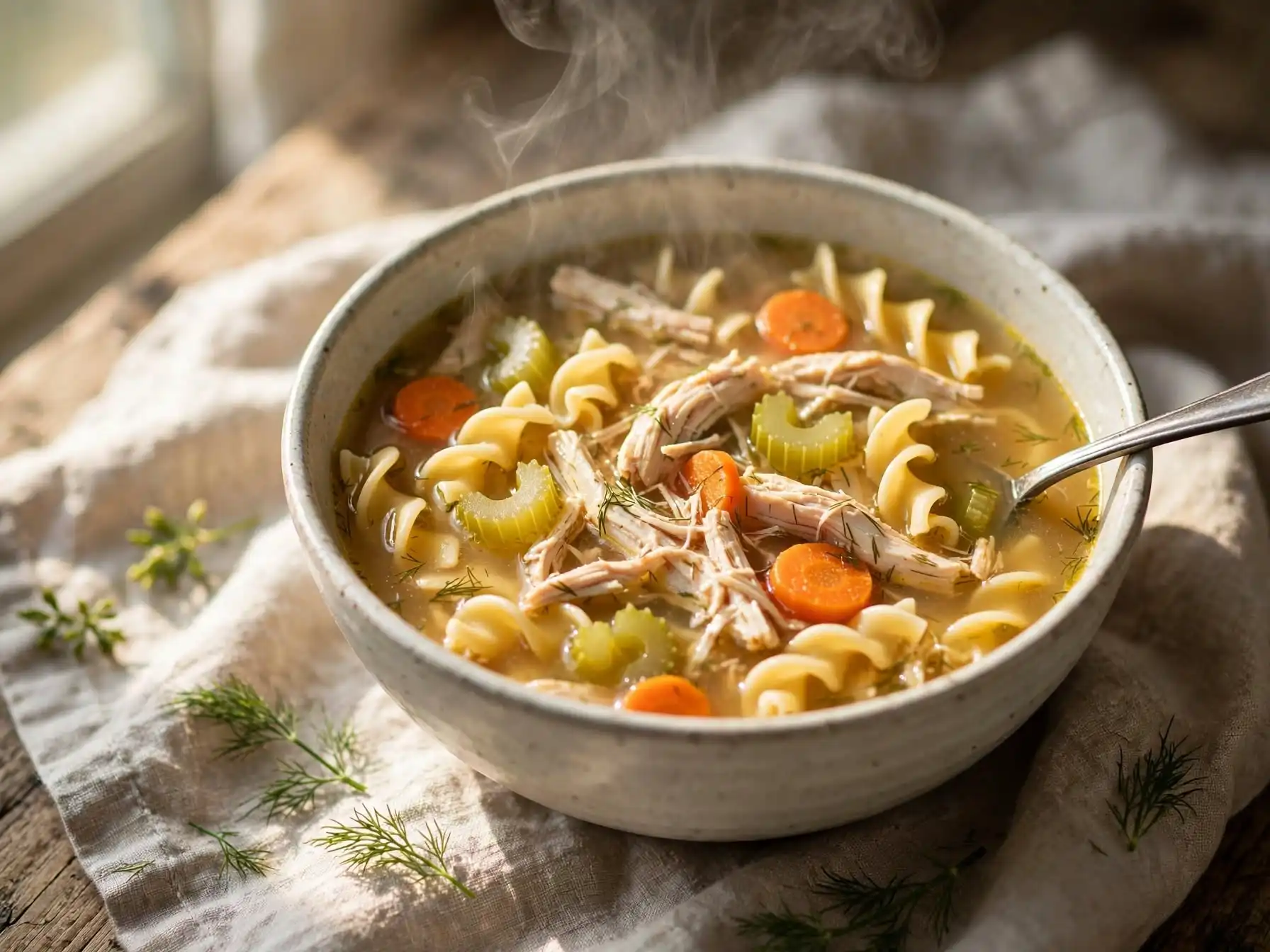
Easy 45-Minute Chicken Noodle Soup
Ingredients
Method
- Sear the seasoned chicken thighs in olive oil over medium-high heat, about 3 minutes per side. Remove and set aside.
- Cook the onion, carrots, and celery in the same pot for 5 to 6 minutes, then add the garlic for 30 seconds.
- Return the chicken to the pot, add the broth, bay leaves, and thyme. Simmer 15 to 18 minutes until the chicken reaches 165°F.
- Shred the chicken and return it to the pot.
- Add the egg noodles and simmer 6 to 8 minutes until tender.
- Remove the bay leaves, stir in the lemon juice, and season with salt and pepper.
- Serve topped with fresh parsley or dill.