Why This Parmesan Crusted Chicken Works
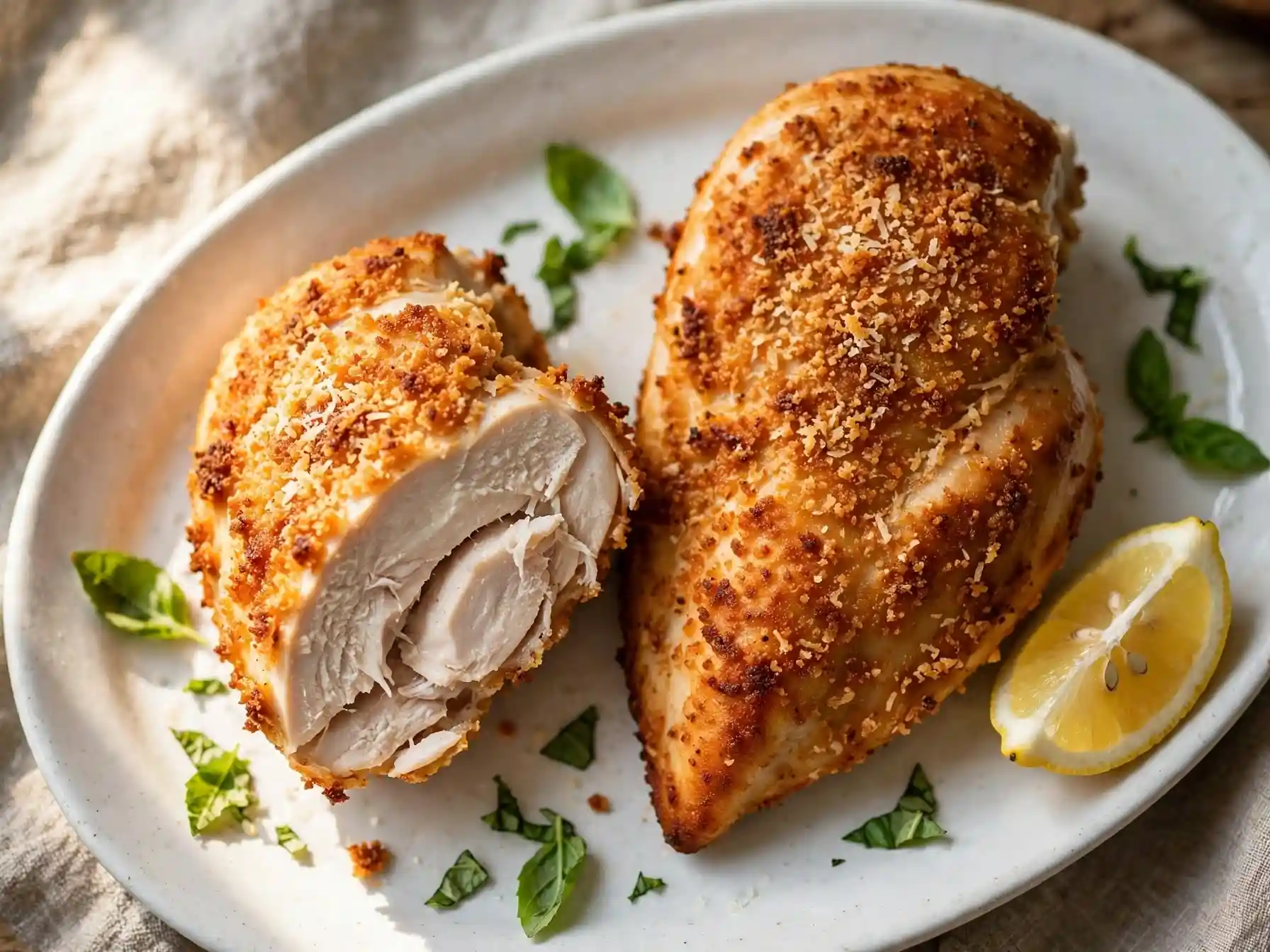
Parmesan crusted chicken lives or dies on one thing: whether the crust actually stays on the chicken instead of ending up in the pan. Most versions turn soggy the second they hit a plate, or the cheese burns before the meat is cooked through. This version fixes both problems with a two-stage coating and a heat level that gives the crust time to set before it browns too fast. You end up with a crust that shatters slightly when you cut into it and chicken underneath that’s still juicy, not the dry, overcooked kind that a lot of quick weeknight chicken recipes turn into.
This isn’t a fried recipe and it isn’t a baked-only recipe either. It’s a stovetop sear finished under a light broil, which gets you a crust with real crunch in under 25 minutes without needing a deep fryer or a thermometer for oil temperature.
Why You’ll Love It
Two things make this one worth keeping in rotation. First, the parmesan is mixed directly into the breadcrumb layer instead of just sprinkled on top, so it melts into the crust rather than sitting as a separate layer that flakes off. Second, pounding the chicken to an even thickness means every piece finishes cooking at the same time, so you’re not left with one dry end and one undercooked center on the same breast.
Ingredients
- 2 large boneless, skinless chicken breasts (about 1.5 pounds total), halved horizontally and pounded to an even ½-inch thickness
- ½ cup all-purpose flour — for a gluten-free version, swap in a 1:1 gluten-free flour blend
- 2 large eggs, beaten with 1 tablespoon water
- ¾ cup panko breadcrumbs — regular dry breadcrumbs work too, though the crust will be slightly less crisp
- ½ cup finely grated Parmesan cheese, plus 2 tablespoons for the coating mix
- 1 teaspoon garlic powder
- 1 teaspoon dried Italian seasoning
- ½ teaspoon kosher salt, plus more for seasoning the chicken directly
- ¼ teaspoon black pepper
- 2 tablespoons olive oil
- 1 tablespoon unsalted butter
- Lemon wedges, for serving
Recipe Timing
Servings: 4 | Difficulty: Easy | Cuisine/Course: Italian-American, Main Course Prep Time: 10 min | Cook Time: 14 min | Resting: 3 min | Total Time: 27 min
The resting time matters more than it looks like it should. Cutting into the chicken right off the heat lets the juices run straight onto the cutting board, and the crust hasn’t finished setting yet either. Three minutes fixes both.
Read Also: Marry Me Chicken
Equipment
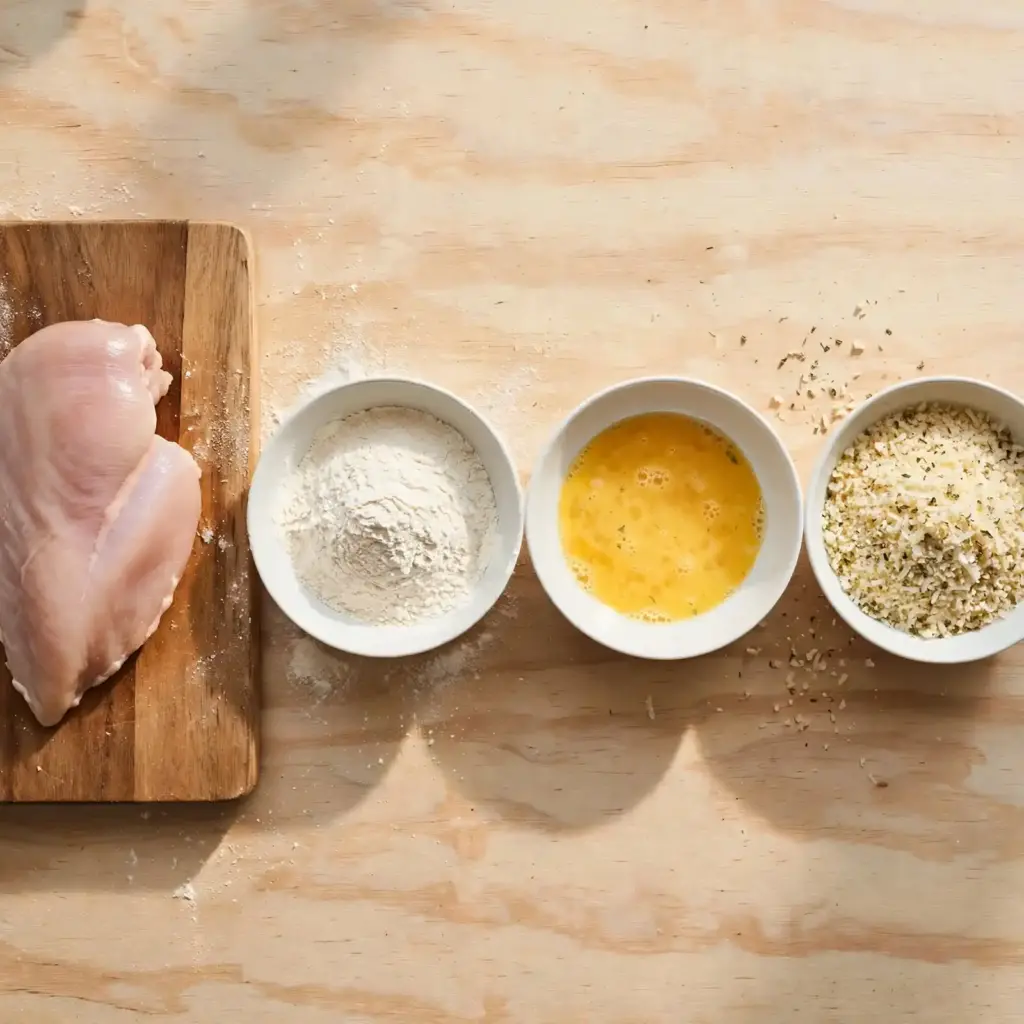
A good parmesan crusted chicken doesn’t need much special equipment. You’ll want a large oven-safe skillet (cast iron or stainless steel, not nonstick, since nonstick coatings usually aren’t rated for the broiler), a meat mallet or the flat side of a heavy pan for pounding, and three shallow bowls or pie plates for the breading station.
How to Make Parmesan Crusted Chicken
1. Pound the chicken evenly. Place each chicken breast half between two sheets of plastic wrap and pound to an even ½-inch thickness. Even thickness is what keeps the thin edges from drying out while the center catches up. Season both sides with salt and pepper.
2. Set up your breading station. In the first bowl, place the flour. In the second, whisk the eggs with the water. In the third, combine the panko, ½ cup Parmesan, garlic powder, Italian seasoning, ½ teaspoon salt, and pepper.
3. Bread each piece. Dredge a chicken breast in the flour, shaking off the excess, then dip it in the egg, letting the extra drip away, then press it firmly into the panko-Parmesan mixture on both sides. Pressing rather than just rolling the chicken through the crumbs is what gets the coating to actually adhere instead of shedding in the pan.
Food safety note: wash your hands and any surface or utensil that touches raw chicken before it touches anything else, and use a separate plate for the breaded raw chicken versus the cooked chicken.
4. Sear the crust. Heat the olive oil and butter in a large oven-safe skillet over medium heat until the butter stops foaming. Add the chicken and cook undisturbed for 4 minutes per side, until each side is deep golden brown. Resist the urge to move the pieces around during this stage. Letting the crust sit still against the hot pan is what builds the crunch.
5. Finish under the broiler. Turn on your oven’s broiler to high. Transfer the skillet directly to the oven, about 6 inches from the heat, and broil for 3 to 5 minutes, watching closely, until the chicken reaches an internal temperature of 165°F on an instant-read thermometer inserted into the thickest part. The crust should be a deep golden brown, not blackened, so check at the 3-minute mark.
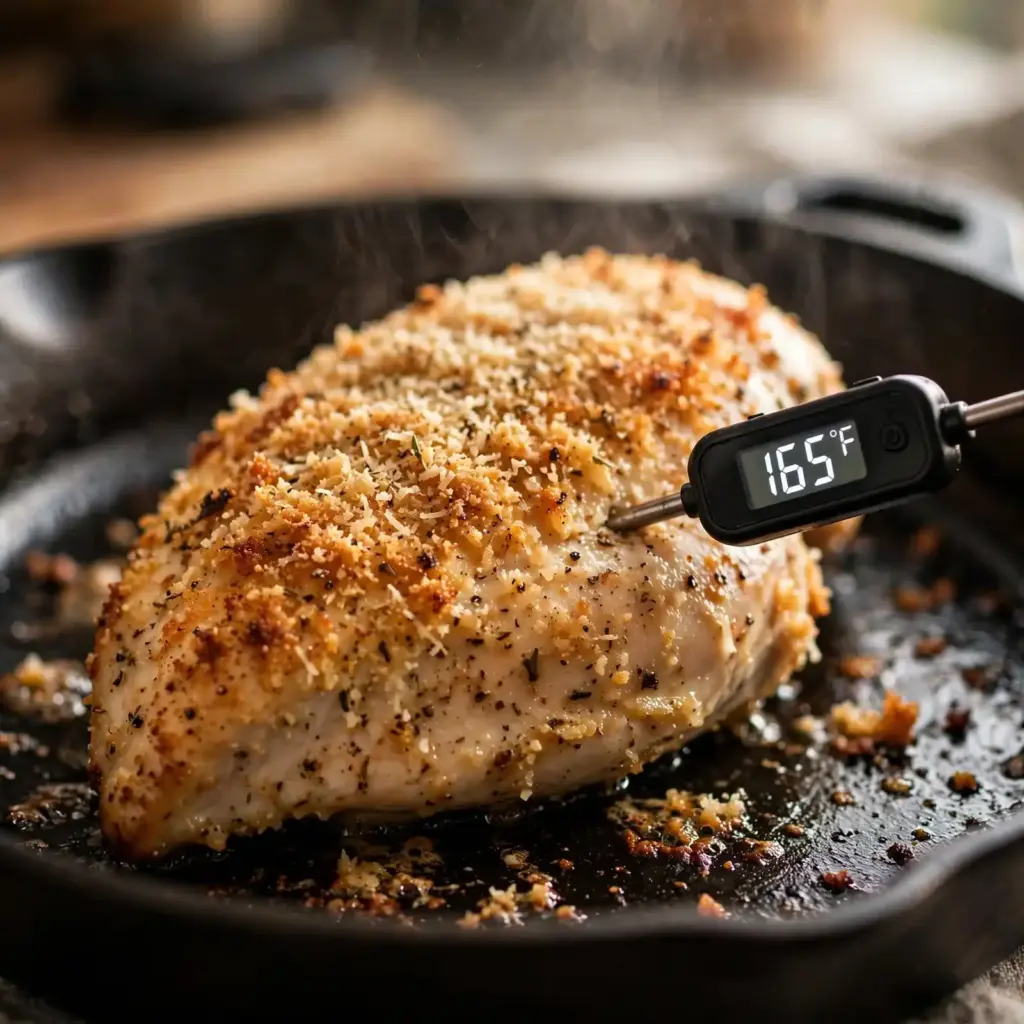
6. Rest, then serve. Let the chicken rest in the skillet for 3 minutes before transferring to plates. Serve with lemon wedges.
Read Also: Chicken Pot Pie
Why This Method Works
Searing first builds a browned crust while the pan is at a controlled, even temperature, which is more forgiving than trying to fry the coating all the way to a deep golden color, a point at which the parmesan can turn bitter before the inside of the chicken is done. Finishing in the broiler adds direct, intense top heat that crisps the last layer of cheese and browns any spots the stovetop missed, without extending the total cooking time.
Key Tips for Parmesan Crusted Chicken
- Use freshly grated Parmesan rather than the pre-shredded kind in a bag. Pre-shredded cheese is coated with anti-caking starch that keeps it from melting evenly into the crust.
- Don’t skip pounding the chicken. Uneven thickness is the single biggest reason people end up with dry parmesan crusted chicken.
- Press, don’t just dredge, when coating the chicken in the panko mixture. A light dusting falls off; a pressed-on layer holds.
- Let the pan get properly hot before the chicken goes in. A cold pan means the coating sits and absorbs oil instead of crisping right away.
Troubleshooting Parmesan Crusted Chicken
The crust falls off in the pan. This usually means the chicken wasn’t dry enough before flouring, or the coating wasn’t pressed on firmly. Pat the chicken dry with paper towels before you start breading.
The cheese burns before the chicken finishes cooking. Your broiler is likely running hotter than 3 to 5 minutes calls for, or the rack is too close to the element. Move the rack down one level and check at the 2-minute mark next time.
The coating turns soggy instead of staying crisp. This happens when the chicken sits directly on a plate right after cooking, trapping steam underneath. Rest cooked pieces on a wire rack instead of a flat plate if you’re not serving immediately.
Once you’ve got the base recipe down, there’s plenty of room to change it up. Here are a few variations on parmesan crusted chicken worth trying.
Variations on Parmesan Crusted Chicken
- Spicy version: add ¼ teaspoon red pepper flakes to the breadcrumb mixture.
- Herb-forward version: swap the dried Italian seasoning for 2 tablespoons finely chopped fresh basil and parsley, added to the panko mix right before breading.
- Baked-only version: skip the stovetop sear entirely and bake the breaded chicken on a wire rack set over a baking sheet at 425°F for 18 to 22 minutes. The crust won’t be quite as deeply browned as the seared version, but it’s hands-off.
Serving Suggestions
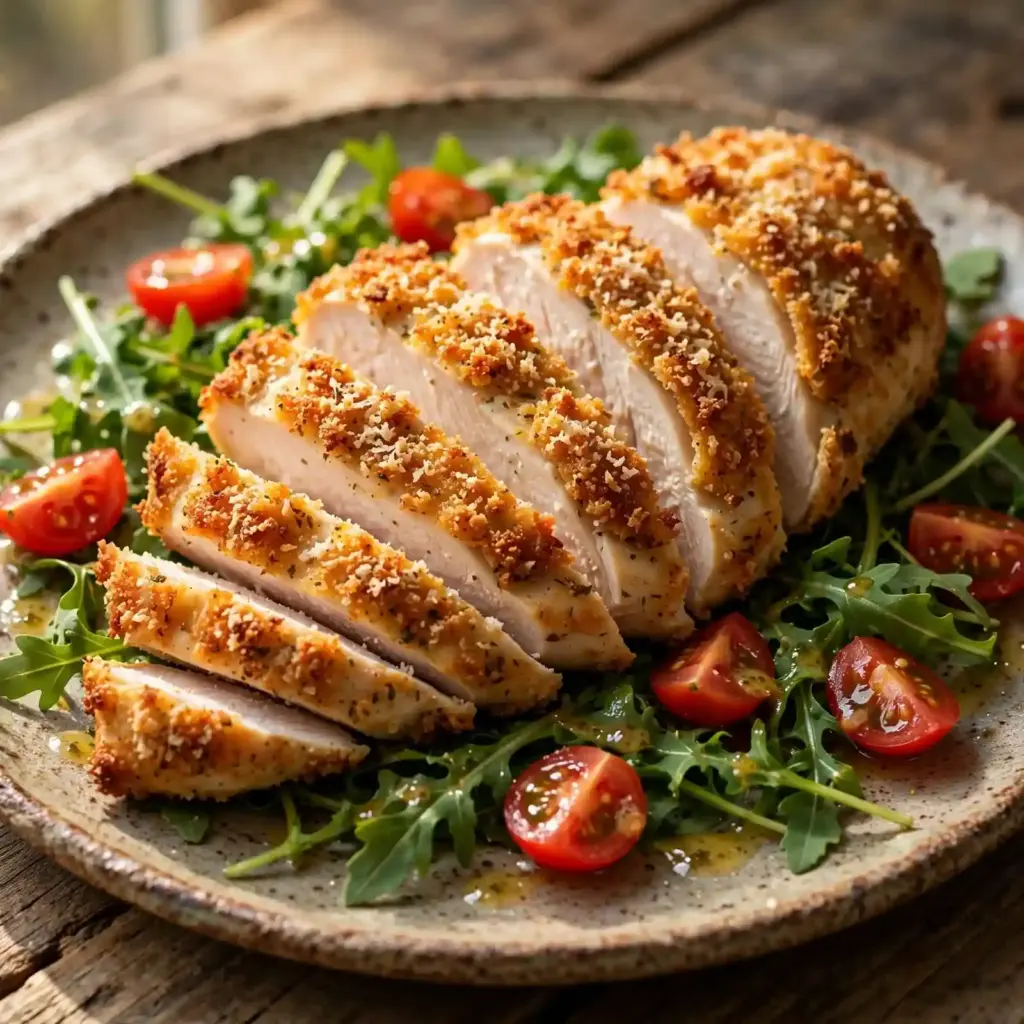
Parmesan crusted chicken pairs naturally with something acidic on the side to cut through the richness of the cheese, like a simple arugula salad with lemon vinaigrette or roasted cherry tomatoes. It also holds up well sliced over pasta with a light marinara, or served whole alongside garlicky sautéed green beans.
Storage, Reheating, and Make-Ahead
Store leftover parmesan crusted chicken in an airtight container in the refrigerator for up to 3 days. Reheat in a 375°F oven or toaster oven for about 10 minutes, on a wire rack if you have one, to help the crust re-crisp instead of steaming soft in the microwave. The microwave works in a pinch, but the coating will be noticeably softer.
To make ahead, you can bread the chicken up to 4 hours in advance and keep it covered in the refrigerator, uncooked, until you’re ready to cook it. This is one of the more common questions people ask about parmesan crusted chicken, since breading a few hours early makes weeknight dinner faster without sacrificing crunch. Freezing the cooked chicken is possible but not recommended, since the crust tends to turn chewy once thawed.
Read Also: Ground Chicken Recipes
Nutrition (Estimated, Per Serving)
Calories: 385 | Protein: 34g | Carbs: 14g | Fat: 21g | Fiber: 1g | Sugar: 1g | Sodium: 540mg
This is an estimate based on the specific ingredients and brands used in testing and will vary depending on your exact products and portion sizes. [Insert your own observed detail here if you’d like to note a specific brand or measurement variance.]
Allergen Information
As written, this recipe contains dairy (Parmesan), egg (in the breading), and gluten/wheat (flour and standard panko breadcrumbs). For a gluten-free version, use a 1:1 gluten-free flour blend and gluten-free panko or breadcrumbs. There is no straightforward substitution for the egg wash that preserves the same texture, so if you need an egg-free version, a thin buttermilk or plant-based milk dip can work as a substitute for helping the coating adhere. These substitutions change the texture and flavor of the finished dish and don’t guarantee an allergen-free result. Always check your specific product labels and consult a professional if you or someone you’re cooking for has a food allergy.
Frequently Asked Questions
Why does my parmesan crusted chicken turn out soggy?
Soggy crust almost always comes down to trapped steam. If the chicken rests on a flat plate right after cooking, moisture collects underneath the crust and softens it within minutes. Set cooked pieces on a wire rack instead, and make sure the pan was fully preheated before the chicken went in.
Can I make parmesan crusted chicken ahead of time?
Yes. Bread the chicken up to 4 hours ahead and keep it covered and refrigerated, uncooked, until you’re ready to cook. Cooking it fresh right before serving gives a noticeably crisper crust than reheating a fully cooked batch.
What can I use instead of panko breadcrumbs?
Regular dry breadcrumbs work as a substitute, though the crust will be a bit denser and less shatteringly crisp than panko gives you. Crushed cornflakes are another option if you want extra crunch and have them on hand.
How do I know when parmesan crusted chicken is fully cooked?
Use an instant-read thermometer inserted into the thickest part of the breast; it should read 165°F. Visually, the juices should run clear rather than pink, and the crust should be a deep, even golden brown rather than pale.
Can I make this recipe gluten-free?
Yes. Swap the all-purpose flour for a 1:1 gluten-free flour blend and use gluten-free panko or breadcrumbs in place of the regular kind. The texture will be very close to the original, though gluten-free panko tends to brown slightly faster, so keep an eye on it under the broiler.
Conclusion
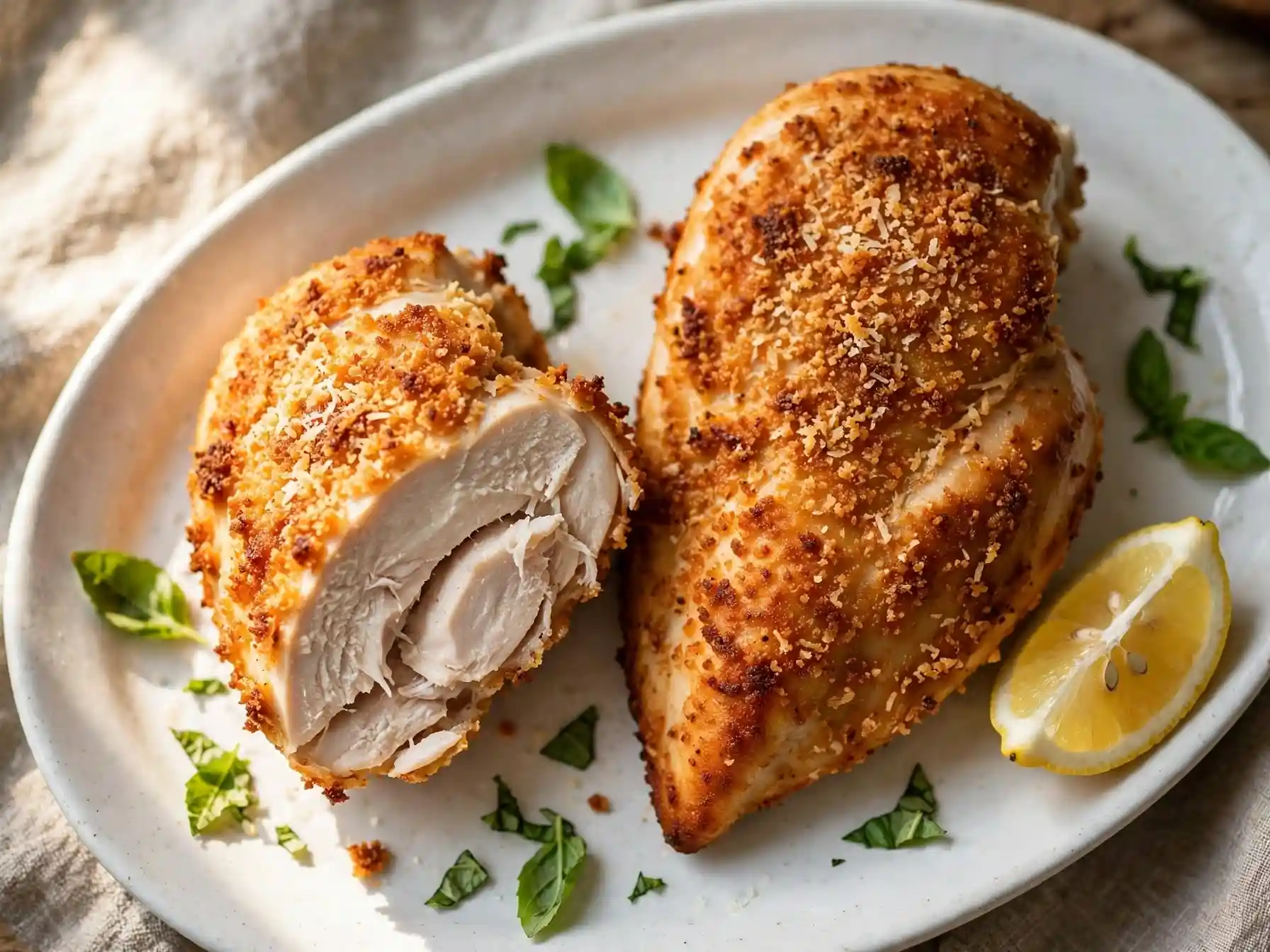
Parmesan crusted chicken earns its place in a weeknight rotation because it delivers a genuinely crisp, restaurant-style crust without deep frying or a long ingredient list. The two details that matter most are pounding the chicken to an even thickne
Parmesan Crusted Chicken
Ingredients
Method
- Instruction Media
- Metadata
- Associated Ingredients
- Inline Ingredients
- Pound chicken to an even ½-inch thickness; season with salt and pepper.
- Set up a breading station: flour, beaten egg, and a panko-Parmesan-seasoning mixture in three separate bowls.
- Dredge each piece in flour, dip in egg, then press firmly into the panko mixture on both sides.
- Heat olive oil and butter in an oven-safe skillet over medium heat; sear chicken 4 minutes per side until deep golden brown.
- Broil on high, 6 inches from the heat, 3 to 5 minutes, until internal temperature reaches 165°F.
- Rest 3 minutes, then serve with lemon wedges.
- Paste instructionsAdd InstructionAdd Instruction Group