The Best 30-Minute Chicken Alfredo Recipe
Some nights call for something rich and comforting that doesn’t take an hour of prep, and this chicken alfredo recipe is built for exactly that. It’s seared chicken breast sliced over fettuccine in a parmesan cream sauce that comes together in one pan while the pasta boils, so dinner is on the table in about half an hour. If you’ve had alfredo sauce break into a greasy, grainy mess before, the method below fixes that by controlling the heat and adding the cheese off the burner.
There’s no jarred sauce here and no flour-based roux weighing things down. The sauce is just butter, garlic, cream, and good parmesan, reduced until it coats the back of a spoon. That’s the whole trick to a good chicken alfredo recipe: quality cheese, low heat, and patience for about ninety seconds longer than you think you need.
Why You’ll Love This Chicken Alfredo Recipe
This isn’t a fussy restaurant technique scaled down badly. Two things make it worth keeping in your regular rotation. First, the chicken gets a real sear in a hot pan before it ever touches the sauce, so you get browned, seasoned edges instead of pale, boiled-tasting meat. Second, the sauce holds up because it’s built with real parmesan (not the pre-shredded kind with anti-caking starch, which resists melting smoothly) and finished off direct heat so the proteins in the dairy never get the chance to curdle.
Chicken Alfredo Recipe Ingredients
- 12 oz fettuccine (regular or gluten-free; check the label if gluten is a concern)
- 1 lb boneless, skinless chicken breast, sliced horizontally into thin cutlets
- 1 tsp garlic powder, 1 tsp onion powder, 3/4 tsp salt, 1/2 tsp black pepper (for the chicken)
- 2 tbsp olive oil
- 4 tbsp unsalted butter
- 4 cloves garlic, minced
- 1 1/2 cups heavy cream (whole milk can work in a pinch but the sauce will be thinner and less stable)
- 1 1/4 cups finely grated parmesan, plus more for serving (buy a wedge and grate it yourself; pre-shredded bags won’t melt into a smooth sauce)
- 1/4 tsp ground nutmeg (optional, but it rounds out the cream nicely)
- Salt and black pepper to taste
- Fresh parsley or basil, chopped, for garnish
Common swaps: if you’re avoiding dairy, this specific chicken alfredo recipe won’t translate well to non-dairy substitutes without real changes to texture, so it’s best treated as a dairy-forward dish rather than one with an easy 1:1 swap. For a lighter version, half-and-half will cut some richness, but expect a noticeably thinner sauce that may need a cornstarch slurry to thicken.
Recipe Timing
Servings: 4 | Difficulty: Easy | Cuisine/Course: Italian-American, Main Course Prep Time: 10 min | Cook Time: 20 min | Total Time: 30 min
Read Also: Chicken Tortilla Soup
Equipment
You’ll need a large pot for the pasta, a large skillet (12-inch, ideally stainless or cast iron for a good sear), tongs, and a box grater or microplane for the parmesan. Pre-grated parmesan in a bag is convenient, but it’s coated in cellulose to prevent clumping, and that same coating keeps it from melting into a silky sauce, so this is one place where grating your own genuinely changes the result.
Instructions
Cook the pasta. Bring a large pot of well-salted water to a boil (it should taste like the sea) and cook the fettuccine until just shy of al dente, about 1 minute less than the package suggests. Reserve 1 cup of pasta water before draining, since that starchy water helps the sauce cling to the noodles later.
Sear the chicken. Pat the chicken cutlets dry with a paper towel (moisture on the surface stops browning) and season both sides with the garlic powder, onion powder, salt, and pepper. Heat the olive oil in the skillet over medium-high until it shimmers, then add the chicken in a single layer without crowding the pan. Cook 4 to 5 minutes per side, until the internal temperature reaches 165°F on an instant-read thermometer and the outside is golden brown. Raw chicken carries salmonella risk until it hits that temperature, so don’t rely on color or time alone, check with a thermometer inserted into the thickest part. Transfer the chicken to a cutting board to rest.

Build the sauce. Lower the heat to medium and add the butter to the same skillet, scraping up the browned bits from the chicken as it melts (that fond is flavor you don’t want to waste). Add the minced garlic and cook for about 30 seconds, just until fragrant, since garlic burns fast and turns bitter past that point. Pour in the heavy cream, stir, and bring it to a gentle simmer, not a hard boil, for 3 to 4 minutes until it thickens slightly and coats a spoon.
Melt in the cheese off the heat. Turn off the burner entirely, then add the grated parmesan in small handfuls, stirring constantly until each addition melts before adding more. Doing this off direct heat is what keeps the sauce smooth instead of splitting into oily pools with clumped cheese. Stir in the nutmeg if using, and season with salt and pepper, keeping in mind parmesan is already salty.
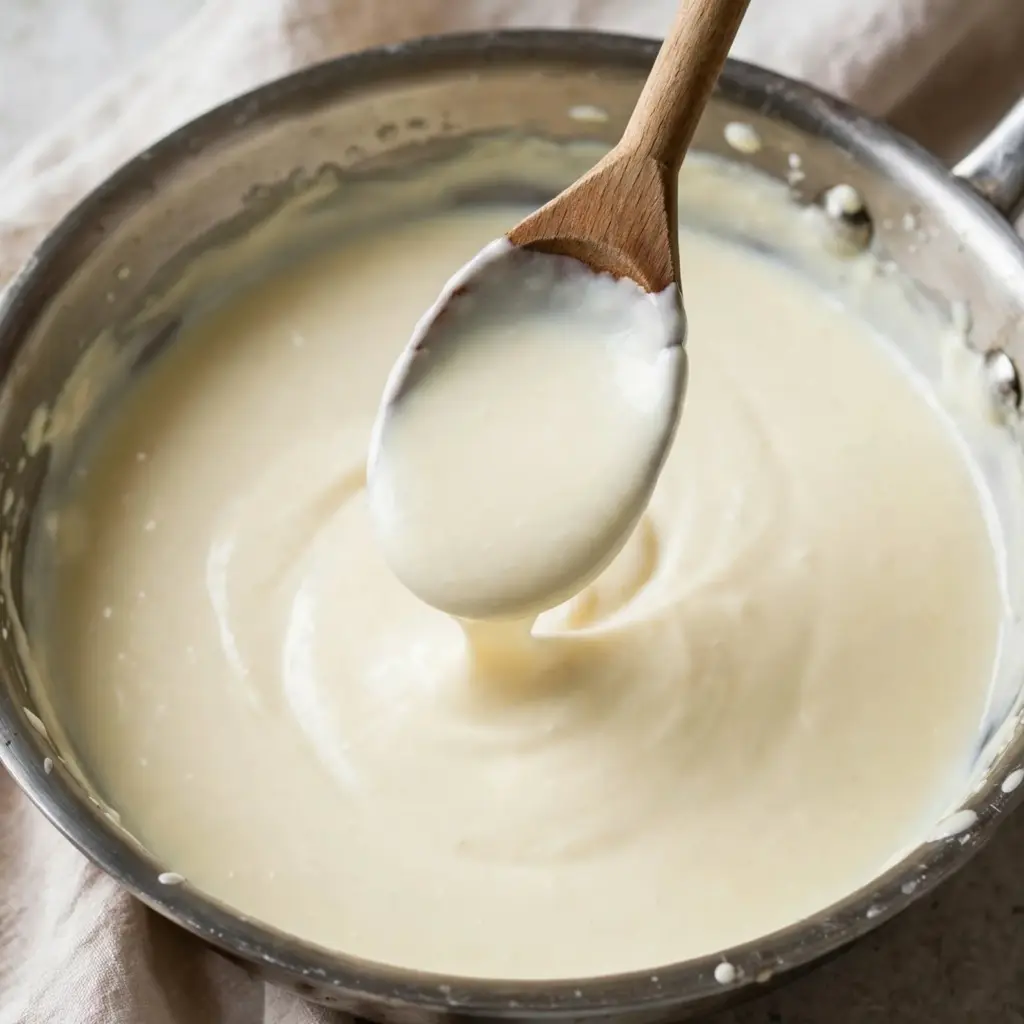
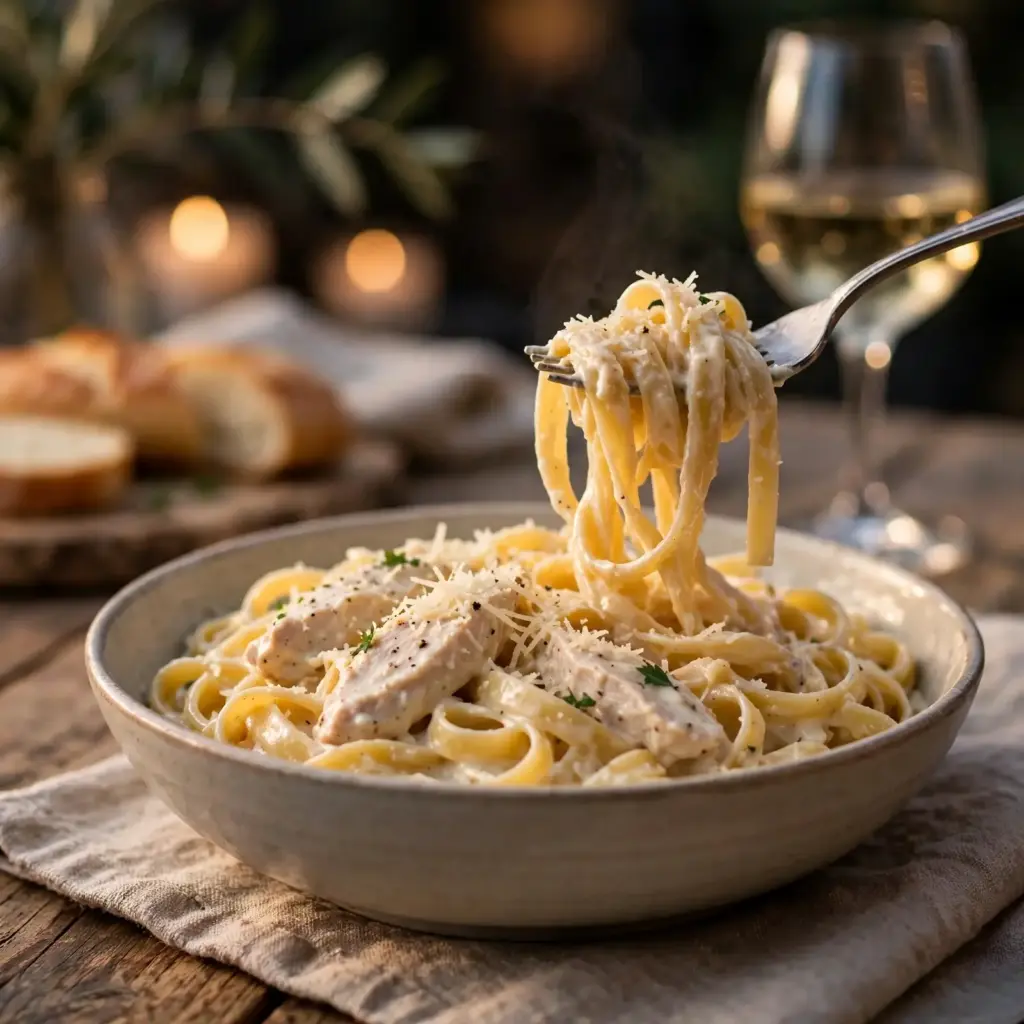
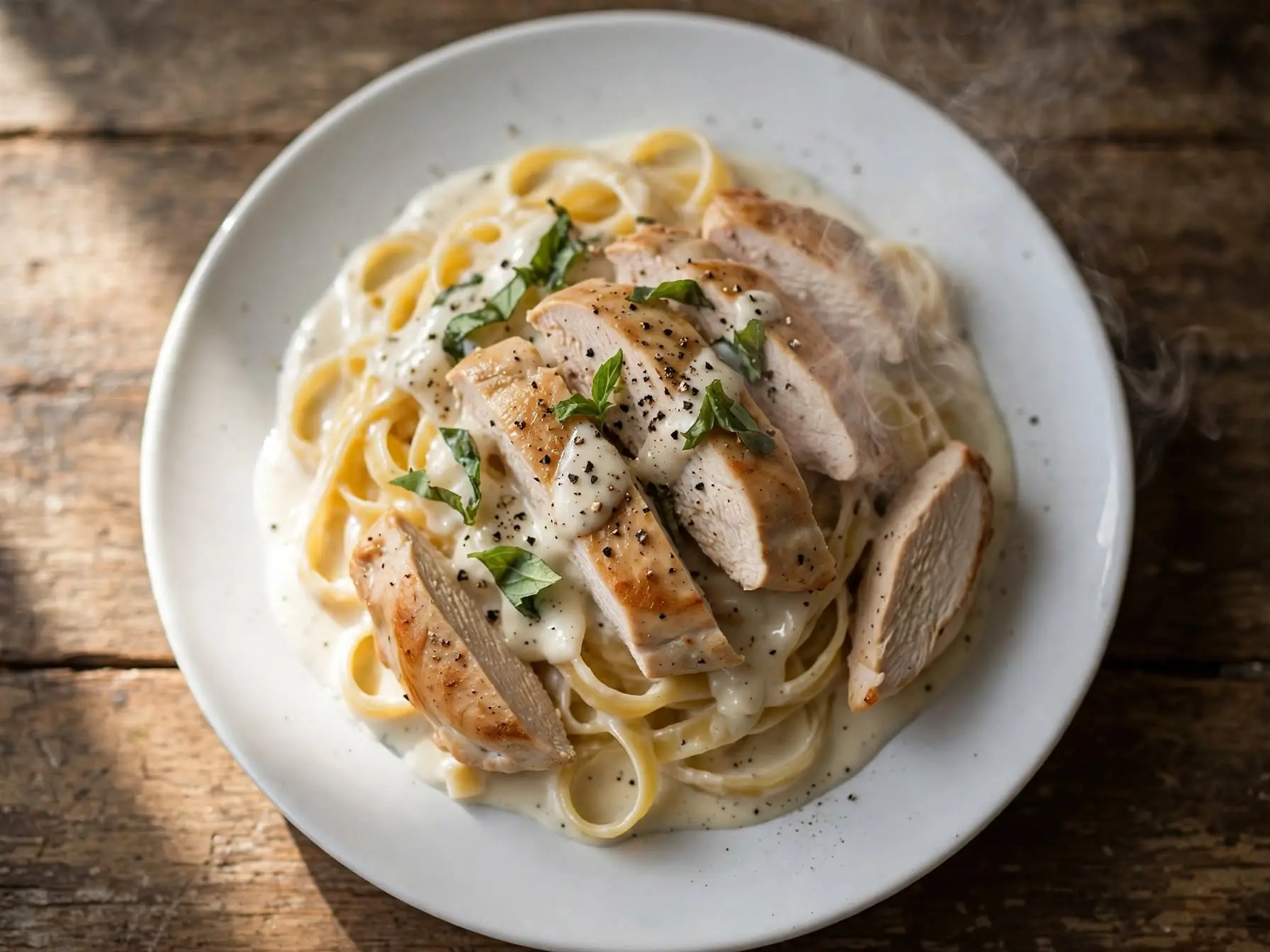
Combine and finish. Add the drained fettuccine to the skillet and toss with tongs to coat, adding a splash of the reserved pasta water if the sauce looks too thick to move freely. Slice the rested chicken into strips and lay it over the top, or toss it in with the pasta. Serve immediately, since alfredo sauce thickens fast as it cools and can turn gluey if it sits too long before plating.
Read Also: Chicken Pot Pie
Why This Works
Grating your own parmesan matters more than most steps in this chicken alfredo recipe because pre-shredded cheese is coated to prevent clumping in the bag, and that same coating prevents it from melting smoothly into a sauce. Taking the pan off heat before adding the cheese matters just as much: dairy proteins tighten and separate above a certain temperature, which is what causes that grainy, oily-looking alfredo you may have made before. Resting the chicken for a few minutes before slicing also keeps the juices in the meat instead of on the cutting board.
Key Tips
Tip: Slice your chicken breasts horizontally into thinner cutlets before seasoning. Thinner pieces cook through faster and more evenly, which means less chance of a dry outside and undercooked center.
Undercooking the sauce reduction is the most common reason this dish turns out thin and soupy instead of clingy and rich, so don’t rush past the 3 to 4 minute simmer before adding cheese.
Troubleshooting
Sauce looks broken or greasy: This usually means the cream got too hot, or the cheese was added while the pan was still over direct heat. If it happens, pull the pan off the burner completely, add a splash of cold cream, and whisk vigorously off heat, it often comes back together.
Sauce is too thick after sitting: Alfredo sauce firms up as it cools because the fat solidifies slightly. Reheat gently over low heat with a splash of milk or reserved pasta water, stirring until it loosens back up.
Chicken came out dry: This is almost always a sign it went past 165°F before coming off the heat, or it wasn’t rested before slicing. An instant-read thermometer removes the guesswork here.
Variations
Swap the fettuccine for penne or rigatoni if that’s what’s in your pantry, both hold the sauce well in their ridges. For a version with more vegetables, stir in a couple of handfuls of baby spinach or steamed broccoli florets right when you add the pasta back to the skillet. If you want a bit of heat, a pinch of red pepper flakes added with the garlic gives the sauce a subtle kick without overwhelming the dish.
Serving Suggestions
A simple green salad with a sharp vinaigrette cuts through the richness of this chicken alfredo recipe nicely, since the acid balances the cream. Garlic bread or a crusty loaf is good for scraping up the last of the sauce on the plate. A glass of unoaked white wine, like a Pinot Grigio, works well alongside it if you’re serving this for a slightly nicer weeknight dinner.
Storage, Reheating, and Freezing
Store leftovers in an airtight container in the refrigerator for up to 3 days. Reheat gently in a skillet over low heat with a splash of milk or cream, stirring often, since microwaving tends to make the sauce separate. Freezing isn’t recommended for this chicken alfredo recipe specifically, cream-based sauces tend to break and turn grainy once thawed, so it’s best enjoyed fresh or from the fridge within a few days.
Read Also: Marry Me Chicken
Allergens and Dietary Notes
As written, this recipe contains dairy (butter, cream, parmesan) and gluten (regular fettuccine). For a gluten-free version, substitute a gluten-free pasta of your choice, texture will vary slightly by brand. There isn’t a straightforward substitution for the dairy in this specific recipe without changing the character of the sauce significantly. This recipe as written contains dairy and gluten; substitutions change the dish but don’t guarantee an allergen-free result, so check your product labels and consult a professional if you’re cooking for someone with a diagnosed allergy or intolerance.
Frequently Asked Questions
Can I make chicken alfredo ahead of time?
You can cook the chicken and make the sauce a day ahead and store them separately in the fridge, then reheat the sauce gently and toss with freshly cooked pasta when you’re ready to eat. Making the full dish ahead and reheating it as leftovers works for this chicken alfredo recipe, but the sauce is always best right after it’s made, before it has a chance to thicken in the fridge.
Why did my alfredo sauce turn grainy or oily?
This almost always comes down to heat. If the cream simmers too hard or the parmesan goes in while the pan is still over direct heat, the proteins in the dairy tighten up and separate from the fat. Taking the pan off the burner before stirring in the cheese, as this recipe does, is the fix.
Can I use a different pasta or protein?
Yes. Penne, rigatoni, or even gnocchi all hold this sauce well if fettuccine isn’t available. For the protein, shrimp works as a swap for chicken, just cook it separately since it needs far less time, about 2 to 3 minutes per side depending on size.
How do I know the chicken is fully cooked?
Use an instant-read thermometer and check that the thickest part of the cutlet reads 165°F. The outside should also be golden brown rather than pale, but temperature is the only reliable way to confirm it’s done, since color alone isn’t a safe indicator.
Is this recipe safe for someone with a dairy allergy?
No, not as written. Dairy is central to the sauce in the form of butter, cream, and parmesan, and there isn’t a substitution in this recipe that removes it while keeping the same texture and flavor. Anyone with a dairy allergy should look for a recipe built specifically around a dairy-free base rather than adapting this one.
Conclusion
A good chicken alfredo recipe comes down to a few details done right: a real sear on the chicken, a sauce built slowly enough to stay smooth, and real parmesan instead of the bagged kind. None of it is complicated, but skipping the small steps, like pulling the pan off heat before the cheese goes in, is usually where things go wrong. Once you’ve made it this way a couple of times, it becomes one of those dinners you can put together on a weeknight without a recipe card in front of you.
The Best 30-Minute Chicken Alfredo Recipe
Ingredients
Method
- Cook fettuccine in salted boiling water until just shy of al dente. Reserve 1 cup pasta water; drain.
- Season chicken cutlets with garlic powder, onion powder, salt, and pepper. Sear in olive oil over medium-high heat, 4-5 minutes per side, until 165°F internally. Rest, then slice.
- In the same skillet over medium heat, melt butter, scraping up browned bits. Add garlic, cook 30 seconds.
- Add cream, simmer gently 3-4 minutes until slightly thickened.
- Remove from heat. Stir in parmesan in small handfuls until melted and smooth. Season with salt, pepper, and nutmeg if using.
- Toss drained fettuccine into the sauce, adding reserved pasta water as needed. Top with sliced chicken. Serve immediately.